Can the bus ever be loved in Auckland?
I love trains. Useful ones that is.
I visited Christchurch in April but - despite the number of postcards and souvenirs adorned with the tram - I had precisely zero inclination to ride it.
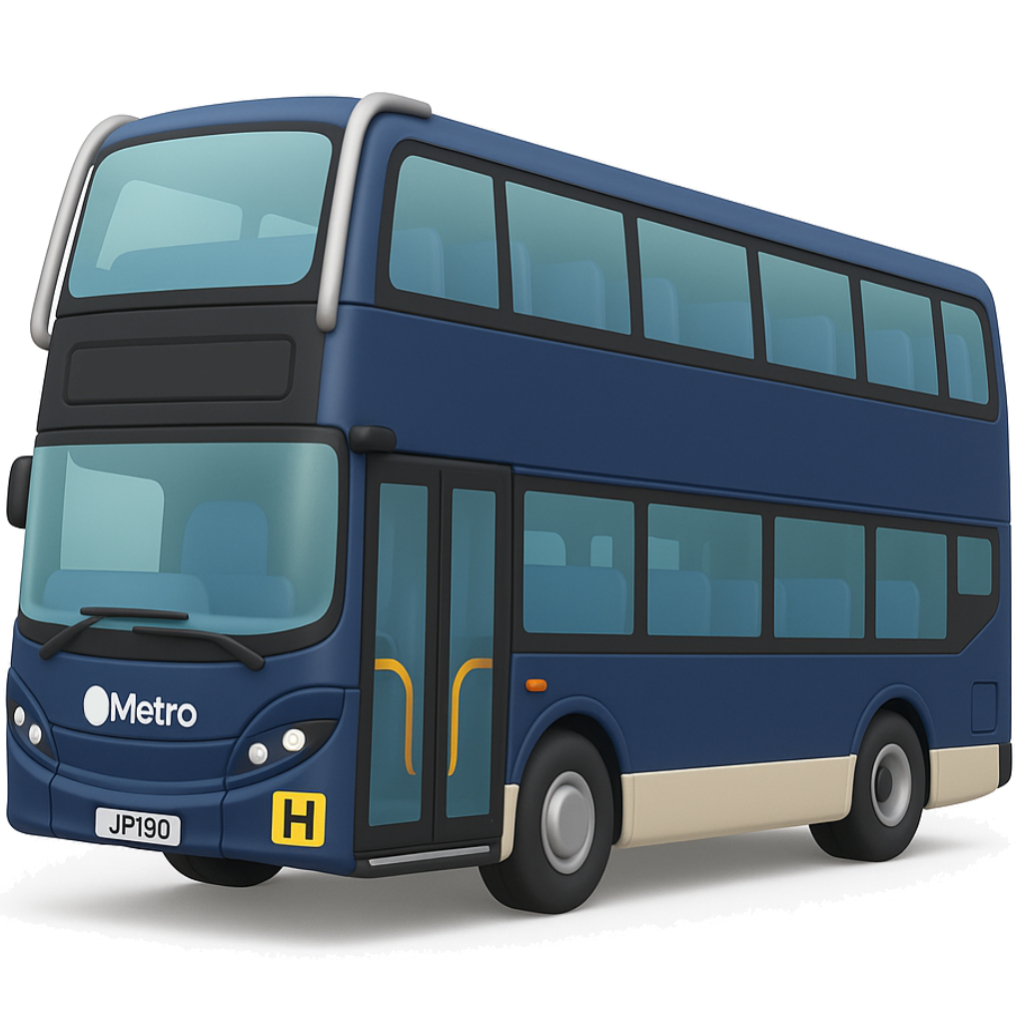
That's probably mostly down to the fact a ticket is at least FORTY DOLLARS. But deep down I don't appreciate toy public transport as much as people often might think for a bus-train fan. I think that's part of the story of what separates public transport advocates from trainspotters, or free fares lobbyists or weird musty-old NZR men.
To be enjoyed, it must be useful as a dignified means of transportation.
If it is not useful as transport, it must be truly overwhelmingly joyful.
I love trains and buses and ferries because of their immense utility.
That's why I find it sad some people love to write home about seeing slow bad trams abroad before they know, or appreciate, fast frequent convenient and proximate buses. In New Zealand the vast majority of public transport ridership will be buses for the foreseeable future short of a Chinese state-backed metro building mania.
That presents most transit authorities with a branding problem. Stinky diesel buses, of which, most, can sometimes be respected for their transportation qualities but never loved for the urban places they ultimately enable. No no. Trams get that award from most people. Trams are classy. Trams are smooth. Trams and trains are frankly just a bit more European, eh? That's why Paris, London or Amsterdam don't have a single bus between them. Trains are iconic. Trams are loved.
Aesthetic considerations are not why trams and trains are truly successful however.
Nor do rails mean fast, reliable, and useful transit. Obama-era trams built in America in the late 2010s proved this point. Many are struggling today simply because they were on terrible alignments or haven't been running frequently enough or were mainly built to spruik developer marketing gloss rather than be truly useful --usually all three.
https://twitter.com/jedwinmok/status/1566897836654034944https://www.thetransportpolitic.com/2014/08/20/a-call-for-minimum-service-standards/
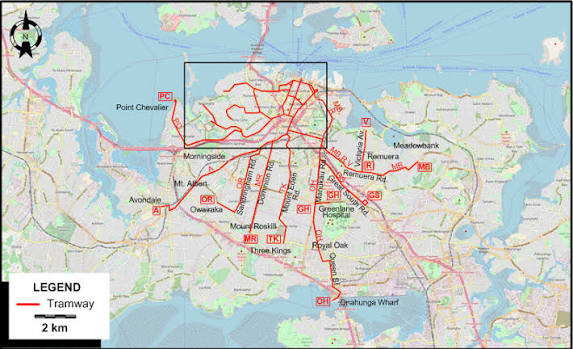
Meanwhile in Auckland, Dominion Road would not exist today as it does had it not been for both the pre-1950s trams, but then also the successive decades of buses that ran down it. Right now, buses run every five minutes during weekdays - at worst, every ten minutes on weekends. At peak, they're carrying more than 50% of the people on that road. They are as essential to the form and function of one of the most iconic streets in Auckland as the asphalt for cars, or the creepy boy in Potters Park.
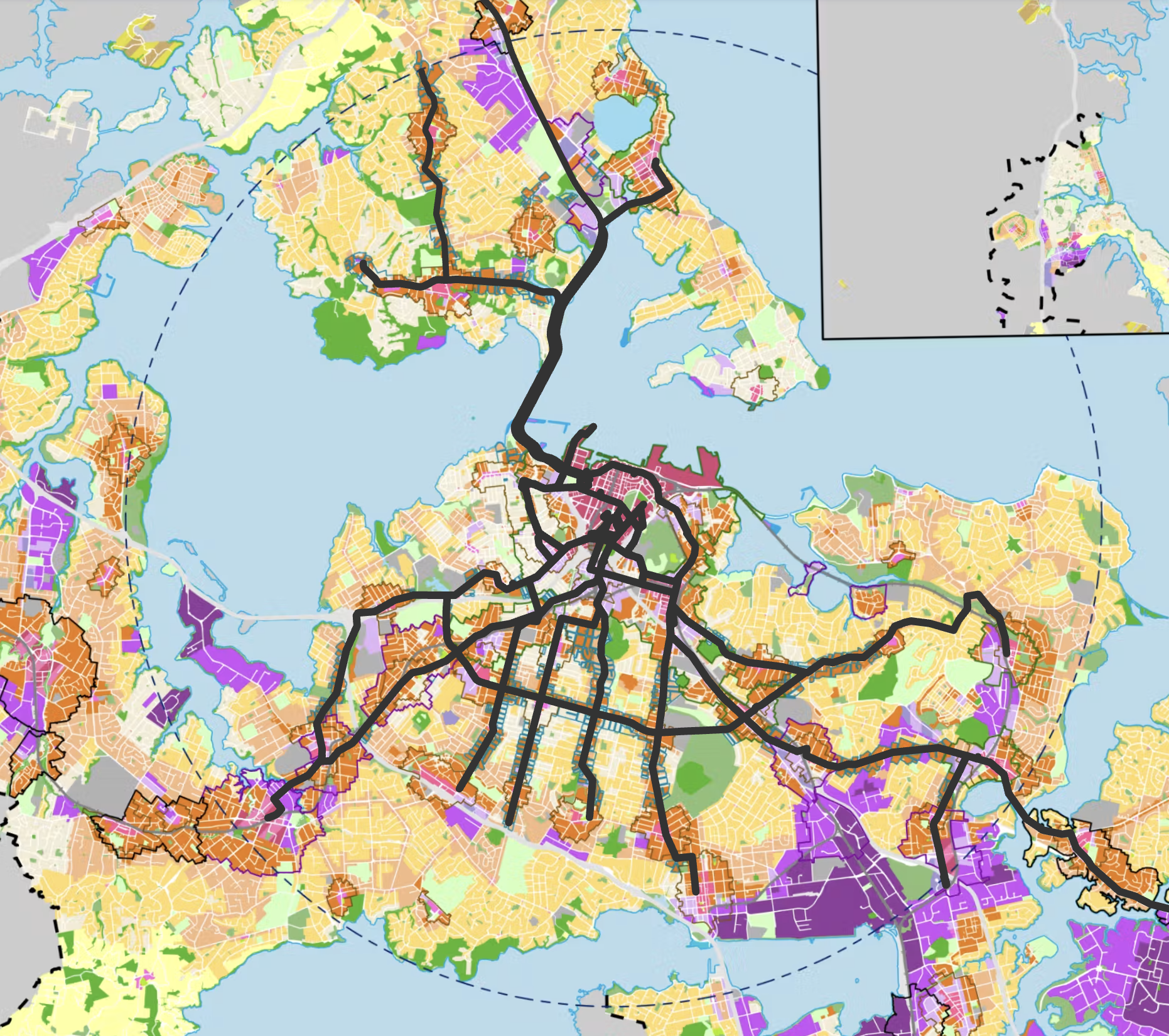
This is only going to become more important as high-quality transit becomes more fundamental to the future urban form of Auckland. When the Unitary Plan was developed in 2016, much of the bus network still remained unreformed. The Plan Change 120 process has taken place 10 years later - after one of the most transformational network evolutions for a car-dependent Australasian city.
Now the busiest bus corridors in the isthmus close to the CBD will have six-storey terraced house and apartment zoning. They include Dominion, Sandringham, Mt Eden, Manukau, New North, Great North, Great South and Remuera Rds. The frequent bus network along these corridors might still not be enough for most people to replace their cars, but it enables more people to do car-lite and to reduce car trips overall.
Those are the places where the future of an urban yopro (competitive with Surry Hills) Auckland - proximate to the CBD and with a proper walkable street grid - will be built. The zoning plans are a catalyst and platform to go further and higher. It's also a self-reinforcing virtuous cycle once you get it going over the medium-long term.
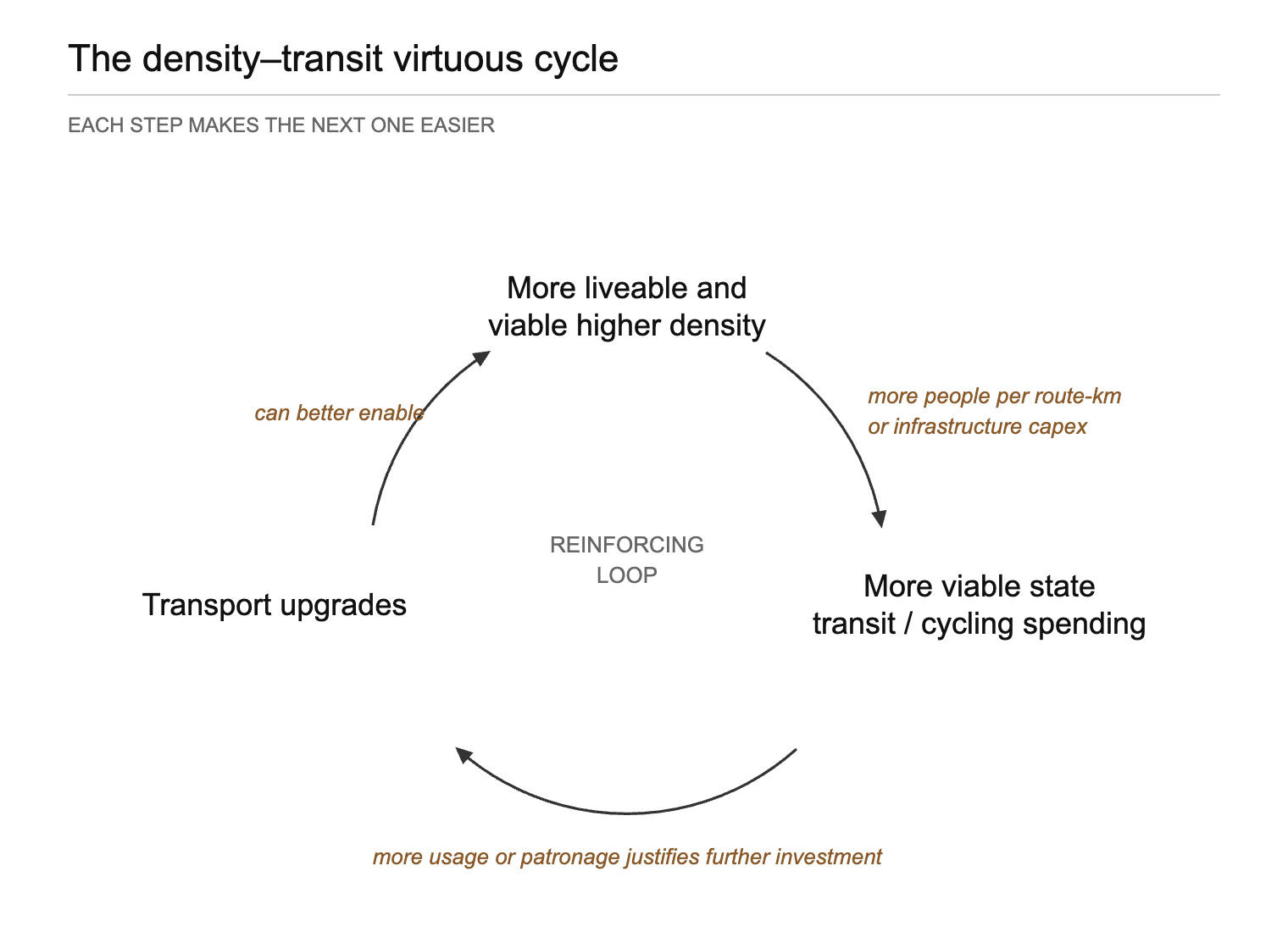
So if usefulness is what makes transit good, and tram rails don't guarantee it, then why do we care about love or civic pride at all? Because those qualities help shape people's ideas, views, and political perspectives about the city they inhabit.
Melbourne's trams do not get major service reductions, or politically disregarded by outer suburbanites in Greater Victoria because they are seen as a fundamental part of the city. A fundamental part of what makes Melbourne work. A fundamental symbol of the kinds of yopro 20-something lives people can live in the inner "tram suburbs". A fundamental part of politics and issues for local representatives.
Aside from trams being a nice symbol of Melbourne, civic pride and a shared colloquial understanding of purpose signals permanence - solidity and certainty of purpose to storytellers, to real estate buyers, to authors, to housing developers, to future councils.
It also makes disinvestment or radical change more politically costly. We've seen flashes of it in examples such as the 312 in Onehunga.
Parts of Auckland have already tried making Buses iconic.
https://www.facebook.com/renewsnz/posts/the-312-wasnt-just-a-bus-route-it-was-an-icon-of-onehunga-the-community-is-now-s/449911358875700/
There's the tourist's love of the Christchurch tram — love of a thing as spectacle. And there's the Melbournite's love of the tram — which isn't actually love of a vehicle at all. Voters like the trams because of what it makes possible for their city and region, for people unlike themselves but who they can see using. A person in Broadmeadows in the wops doesn't ride the trams, but they know the tram is why the inner suburbs hum and an important part of what makes Melbourne tick.
I believe it's worth distinguishing the two, and it's worth pursing the latter for Auckland - except with the mighty bus. So can buses ever be loved as part of Auckland? Iconic, even? There's a few ways we can start trying. The question must stop being "can buses be loved?" and instead should become "how do you enable people to love buses?"
The bus can be loved the way Melbourne loves its trams — but only if we build the conditions for it deliberately. Here are some random ideas.
Distinguish with minimum service standards (and later delineate)
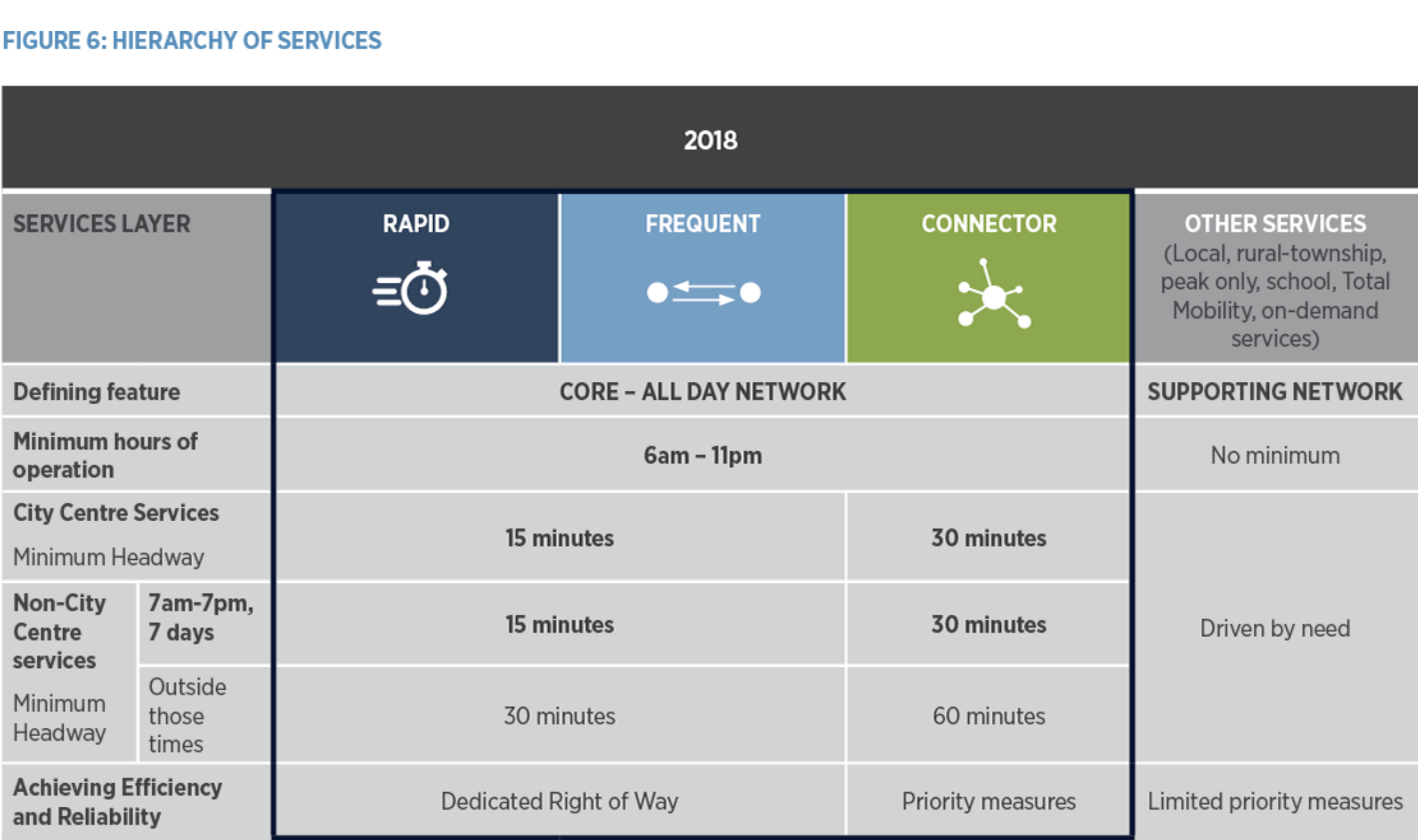
Auckland has a lot of buses. Not all of them are super useful. Thankfully as a region we already have a very good tier and class system for bus routes, but I think this can go one step further. Carve out a new top class above ordinary frequent bus lines. Call it the super frequent network (SFN). Not quite rapid transit but also head-over-heels better than the regular frequent buses which are positively becoming more common place.
On the SFN, Aucklanders should expect
- Buses at least every 10 minutes, 5am to 10pm; at least every 15 minutes until 12am
- Bus lanes across whole-of-route and active AM and PM peaks. 11am-1pm on weekends.
- High-capacity vehicles with lots of room for people to move
That means reliable buses at least every 10 mins all day every day, more often at rush hour. We've reached the threshold for being able to live a car-lite or car-free life.
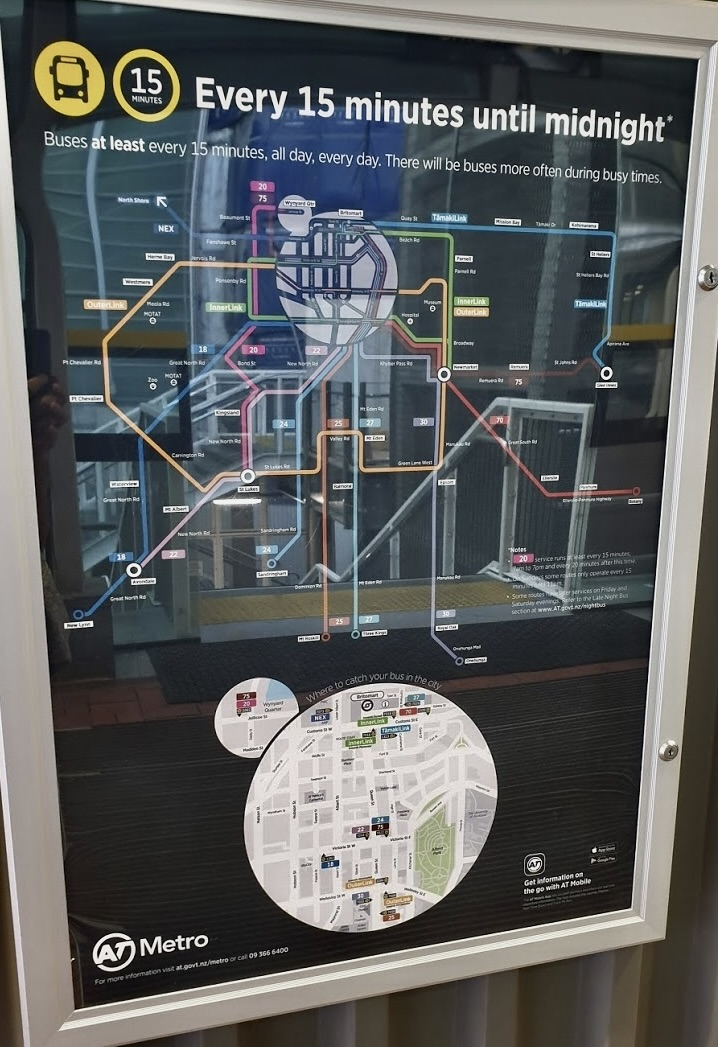
Some buses already meet the thresholds of the SFN, but most of the core routes in the isthmus only need a bit of spick and span to bring up to standard. Now how do we let people know that these buses are special, useful, kind, and super cool?
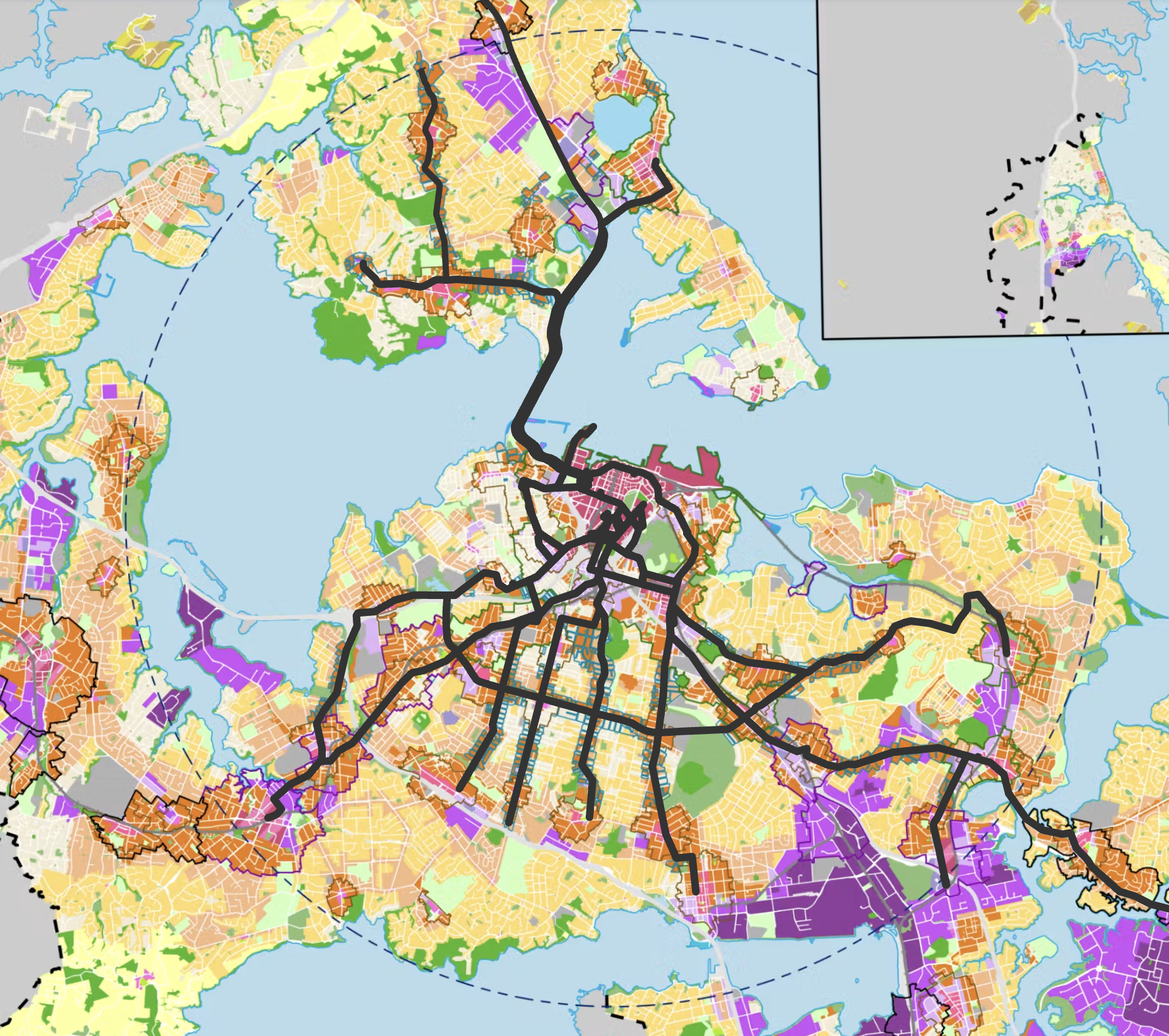
Here's the corridors it applies
We need to be picky about the corridors where this will apply. I will posit that it should start by applying to the existing corridors as part of PC120 chosen for upzoning - plus the Tāmaki Link, the Inner Link, the Outer Link, and the 20.
Let's get colourful!
Colours matter for one. Auckland's buses are in the most uninteresting of colours and wraps. Navy. Now, I respect looking mournful, dignified and quiet - but wearing navy is not the subconscious message that public transit in Tāmaki needs!
This is one thing I think Wellington has gotten right.
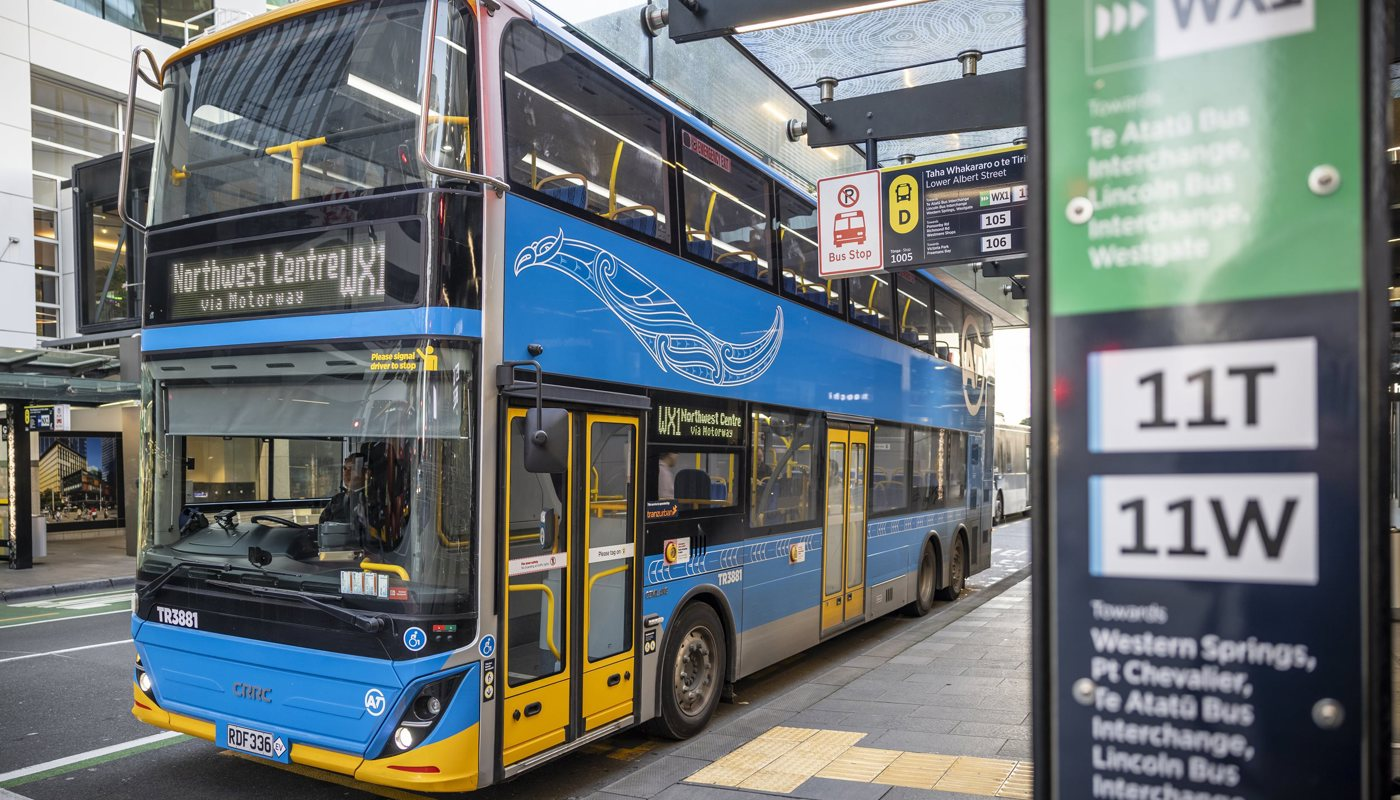
So what should we consider? The easiest would be some custom version of the existing "Shore Blue" design used on the WX1. The water colouring and theming works well in Auckland, and I think a couple tweaks could really make the livery shine.
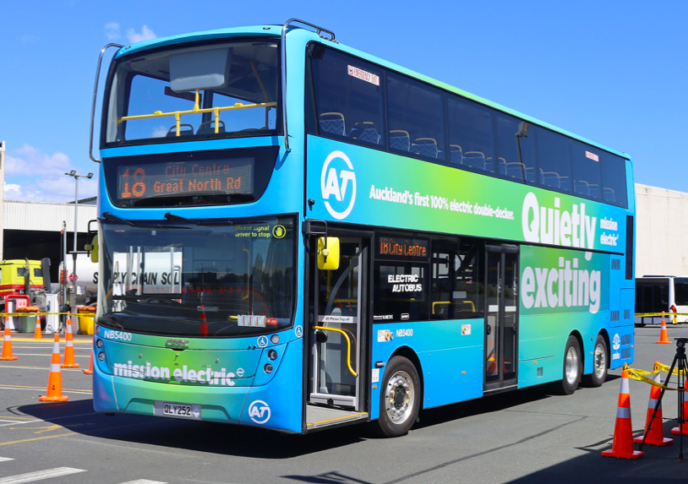
There was also the custom branded first electric double decker with a gradient that looked very sharp indeed. I could definitely see something like this working.
Otherwise, I think Berlin has a very smart look with their black and yellow theming, which would actually be a throwback to the B-line branding in Auckland back from the late-2000s, which was effectively a failed attempt at doing this exact kind of theming.
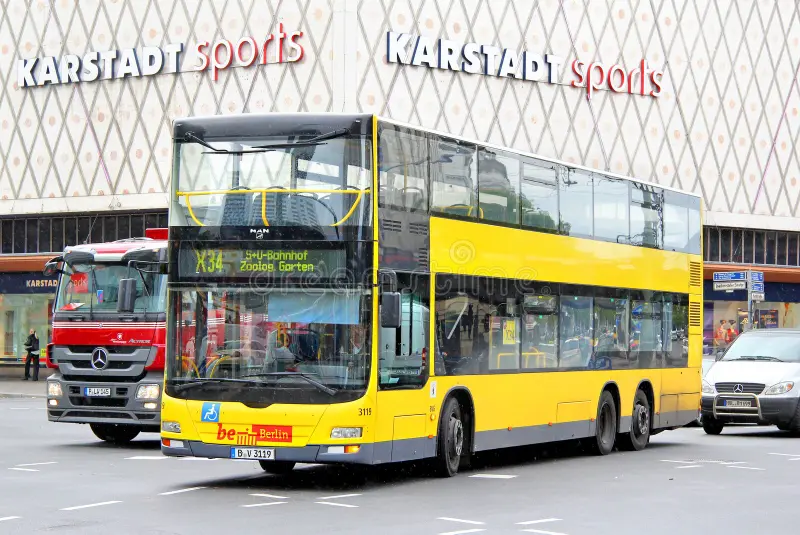
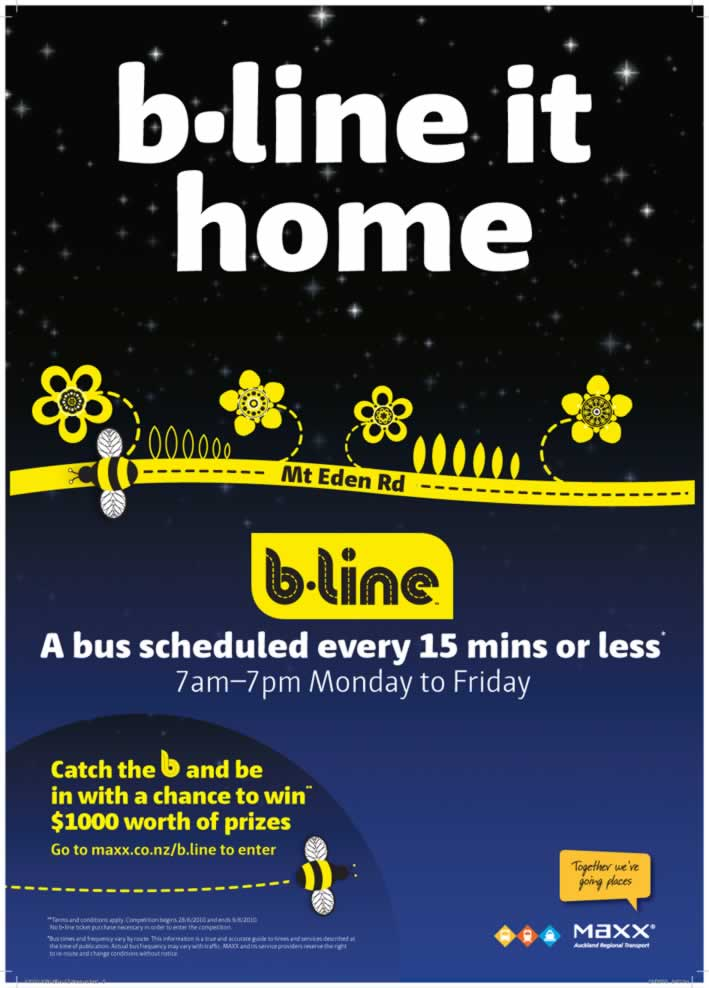
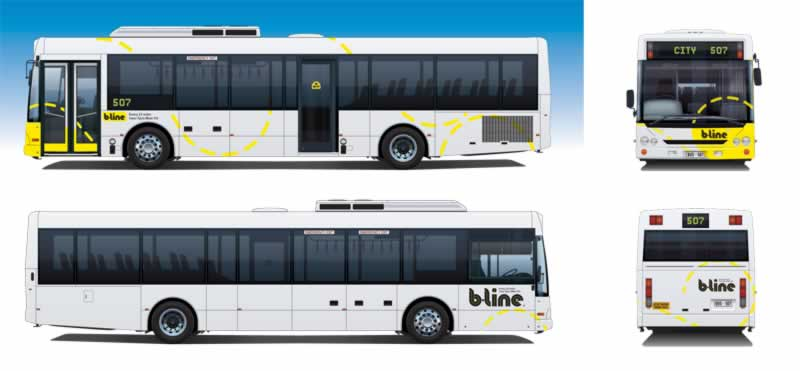
Double decker electric dream
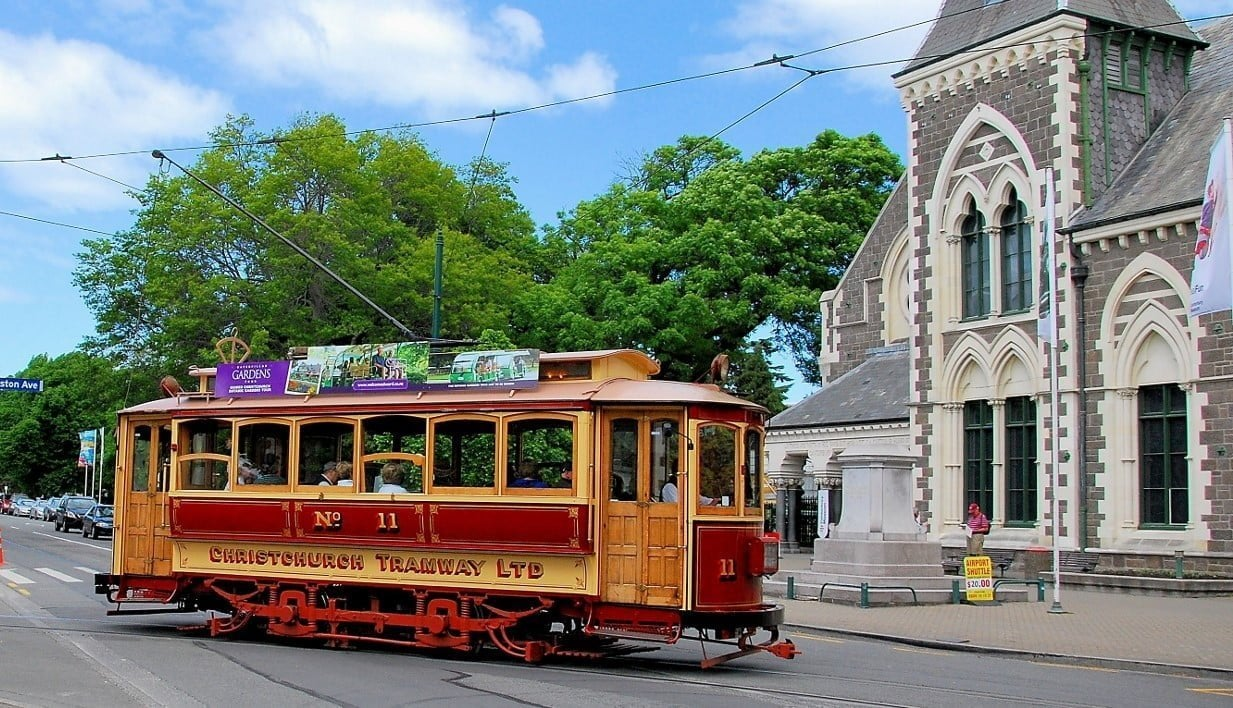
Double-deckers are inherently more iconic, and Auckland already runs them. Quiet, smooth, clean electric buses help to kill the "stinky diesel" problem and they help to improve the image of buses integrating into town centres such as Mt Eden or Parnell.
https://open.spotify.com/track/0skyWBXcVWTxCr0KyDmJc9https://open.spotify.com/track/2GiJYvgVaD2HtM8GqD9EgQ?si=7f2ab59555ec465b
Better stops
Right now, many of the stops along what would be the Super Frequent Network are tightly spaced and also very barebones. The former is bad because this slows down bus services overall and often these distances are truly egregious.
With the latter, there's a strong argument for not integrating too much new infrastructure in the event these streets receive kerb-to-kerb rebuilds in the near future. However, this is still not a good enough reason for current facilities to be as inadequate as they often are. There are a couple options for this.
I think converted containers would fulfil the job - they often do a better job at providing shelter than actual expensive permanent bus shelters.
But those aren't very nice otherwise. Beauty at scale tends to be the principle around public transport facilities. Let there be beauty, but not at the expense of scale which is what's important in the context of highly distributed small-sized infrastructure.
Maps, signage, and culture (delineate)
It's important that once the SFN is distinguished, that it must be delineated. It must be felt as something special and good within Auckland. This means we need to have maps and diagrams which specifically draw attention to the routes on the SFN.
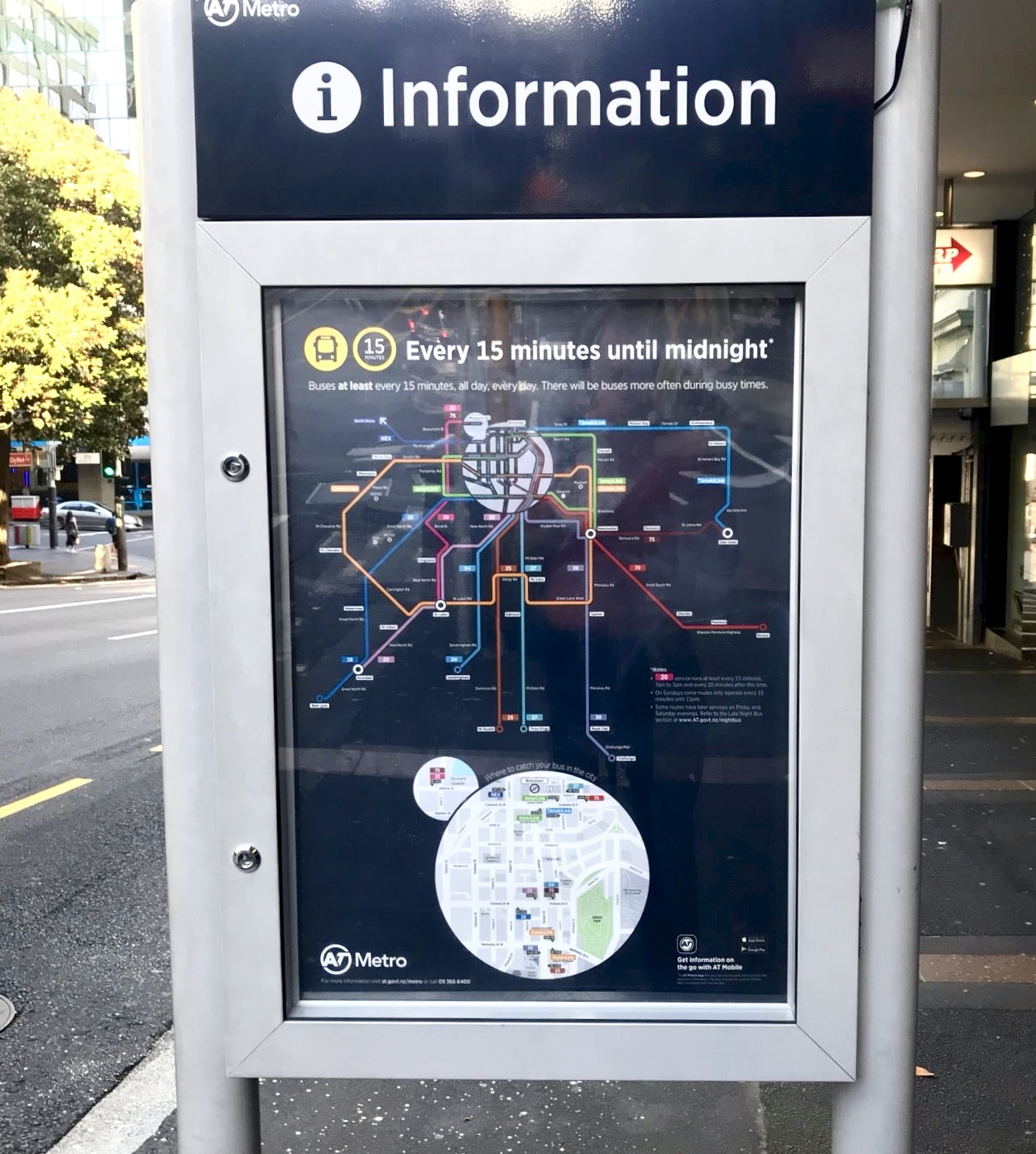
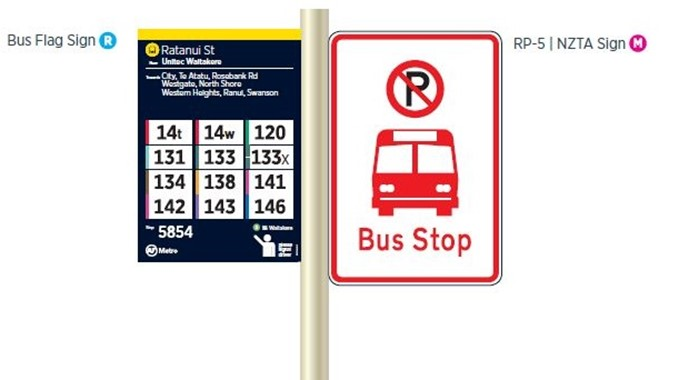
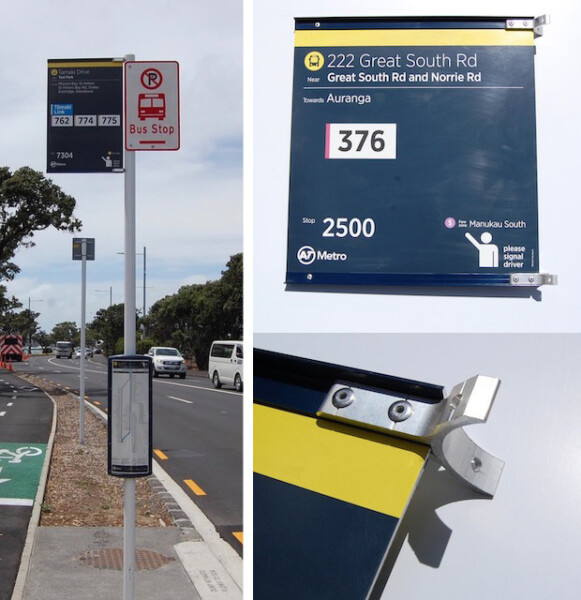
We also need a way of clearly making obvious stops which have better than frequent service. This will need to take priority in wayfinding and bus stop flags/signs.