Auckland’s bus route numbering explained
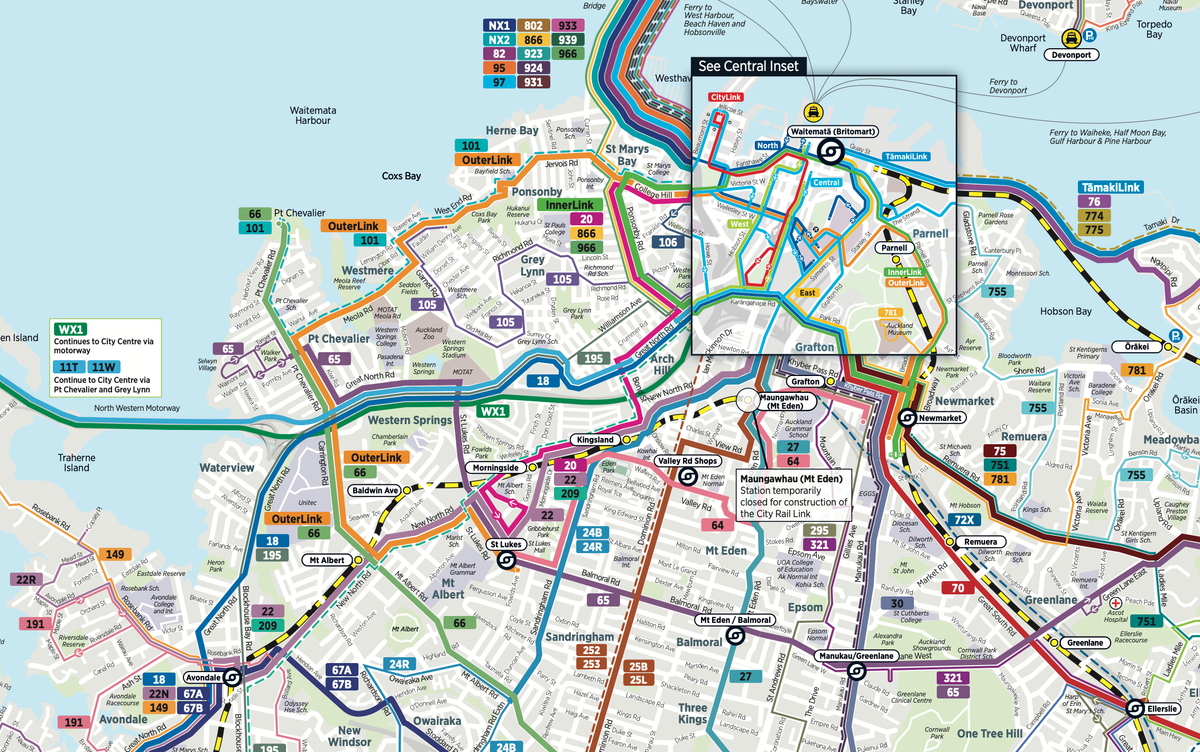
Thanks to bus reform, Auckland's bus system has gone from one of the worst in the developed world to one of the best in Australasia. Swathes of the public transport network are unrecognisable eight years on.
With PTOM giving Auckland Transport (AT) the powers to design an actual network,* routes have gone from uncontrolled commercial chaos, to something that somewhat resembles smart planning.
As far as big projects go, it happened fast and mostly under the radar. But one of the most visible and symbolic changes has been the line numbering system that now neatly categorises and organises Auckland's buses. It's one of those things that sounds boring until you realise how much it matters.
How many digits and letters?
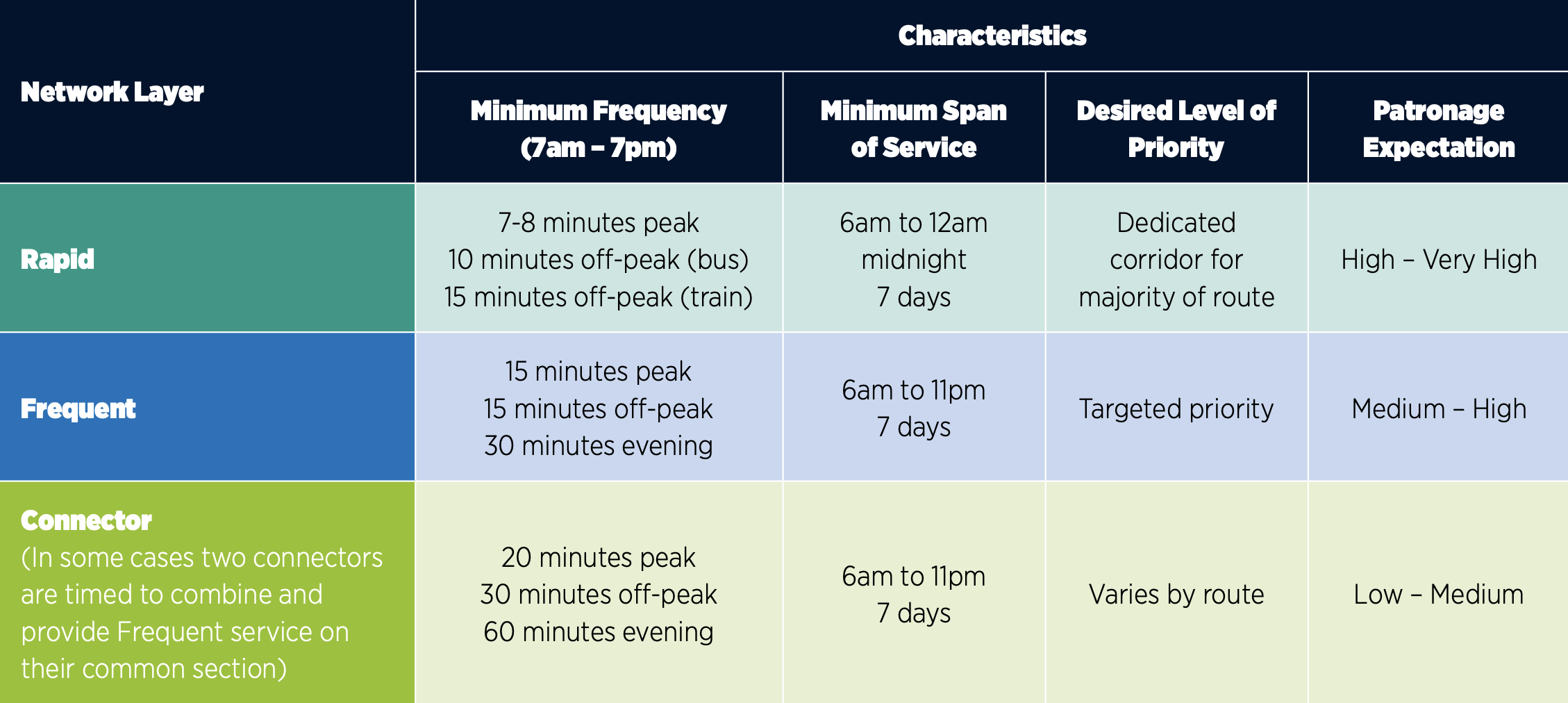
At the core of the line numbering scheme in Auckland is a hierarchy. The backbone of the bus network consists of frequent lines - these lines operate every 15 minutes, 7am to 7pm, seven days a week. Often more frequently and for longer periods, depending on the route. The numbering system distinguishes these with a two-digit designation: 30, 32, 70.
This makes Auckland almost unique — one of the few cities in the world that changes bus route numbering based on a minimum frequency standard. It obviously increases the cost of a frequency upgrade, but it also makes the hierarchy crystal clear, signalling that there's an actual network at work here, not just a collection of random lines.
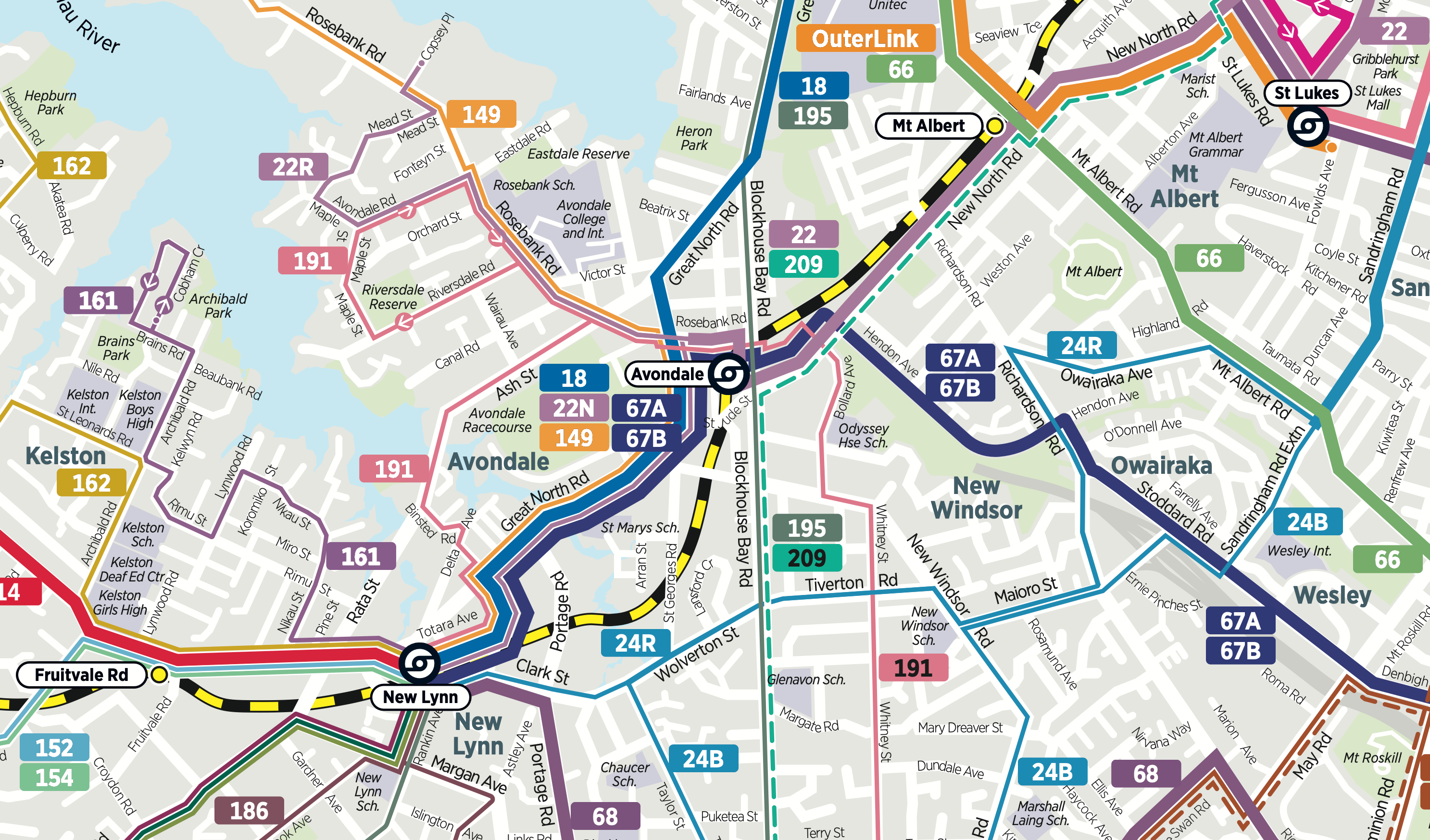
For frequent buses with branches, the system uses uppercase letters to clearly distinguish different endpoints while showing the shared sections on maps. So you get 25B or 25L, 27H or 27W. The letters usually refer to the suburb or streets the branch serves: 25B means the 25 to Blockhouse Bay, 25L goes to Lynfield, and so on. Other examples include the 72M, which goes through Millhouse and Meadowland Dr, while the 72C goes via Chapel Rd and Cook St.
Sometimes they just use A/B when a suitable letter combination can't be found. The 67A terminates at Ōtāhuhu while the 67B goes to Onehunga. Using O for both would obviously create confusion — and 67O looks too much like 670. The A/B style is also used on Waiheke Island by the 50A/50B. The letter X denotes express services: 72X, 309X.
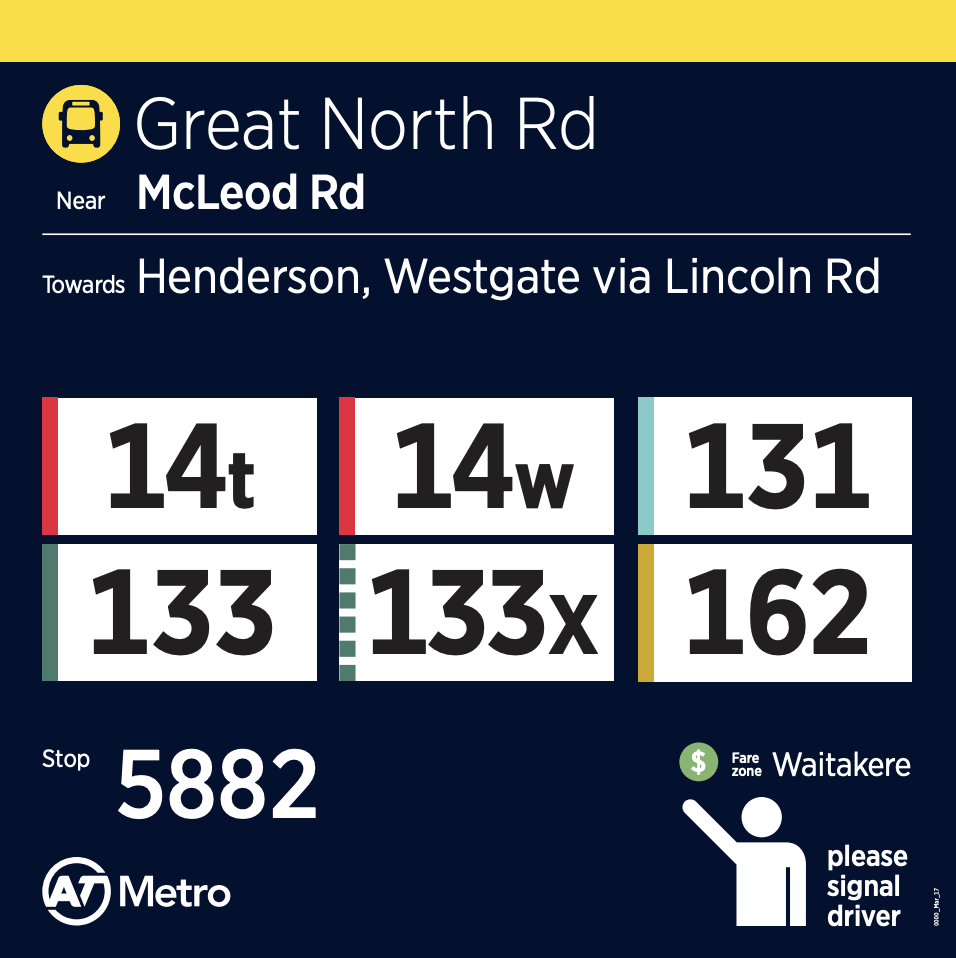
Meanwhile, three-digit routes are for "connector" and "local" services that run less frequently than the 15-minute promise of the frequent lines. But their numbering can still hint at future upgrades. Route numbers ending in zero — 120, 650, 670 — were intended for later conversion when funding became available. Other upgrades have simply dropped the final digit: 743 became 74, and the 942 became 94.
Then there's the Northern Express — the NX1 and NX2. It used to be called the NEX, but when they added the NX2 as part of the new network, they needed a branching system for bus rapid transit services. The naming convention continued with the Western Express — the WX1.
What numbers to pick?
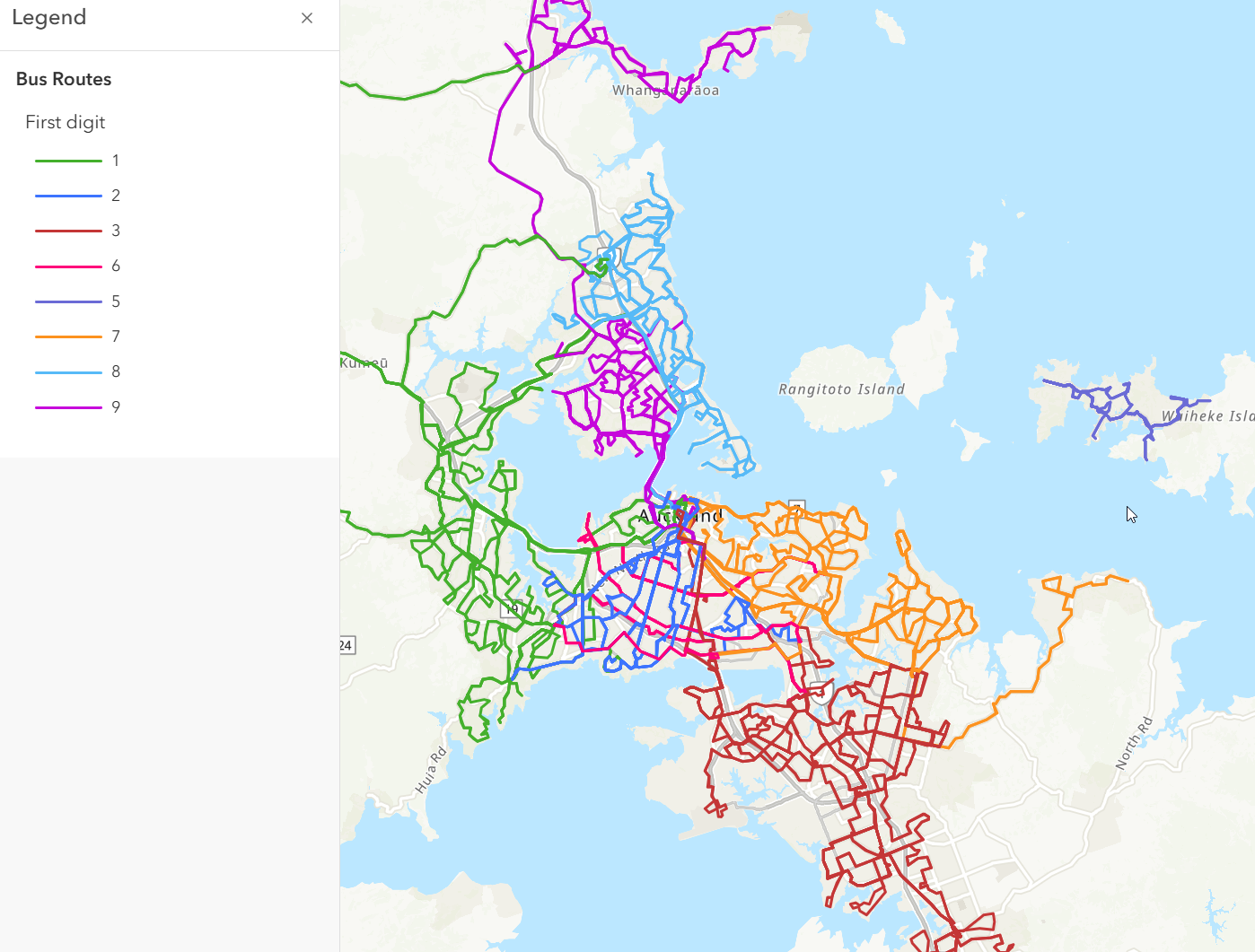
Route numbering in Auckland is split up into several subregions.
1s = Inner West, West Auckland and Northwest Auckland
2s = Central Isthmus (western half)
3s = South Auckland + Southeast Auckland + Southern Auckland
4s = Drury (future)
5s = Waiheke Island
6s = Central Isthmus (crosstown routes)
7s = East Auckland and Central Isthmus (eastern half)
8s = North Shore (eastern half)
9s = North Shore (western half) + North Auckland
Looking at a map, you can see how cleanly the bus network splits into subregions. There are only a few examples of crossover.
The old frequent lines in the central isthmus and parts of the North Shore were some of the only routes to keep most of their numbers from before the redesign. This meant adding branching letters, but otherwise keeping the first two digits of several lines. A few other isolated examples survived, like the 380's conversion into the 38, or others like the 195 which didn't change in the switchover.
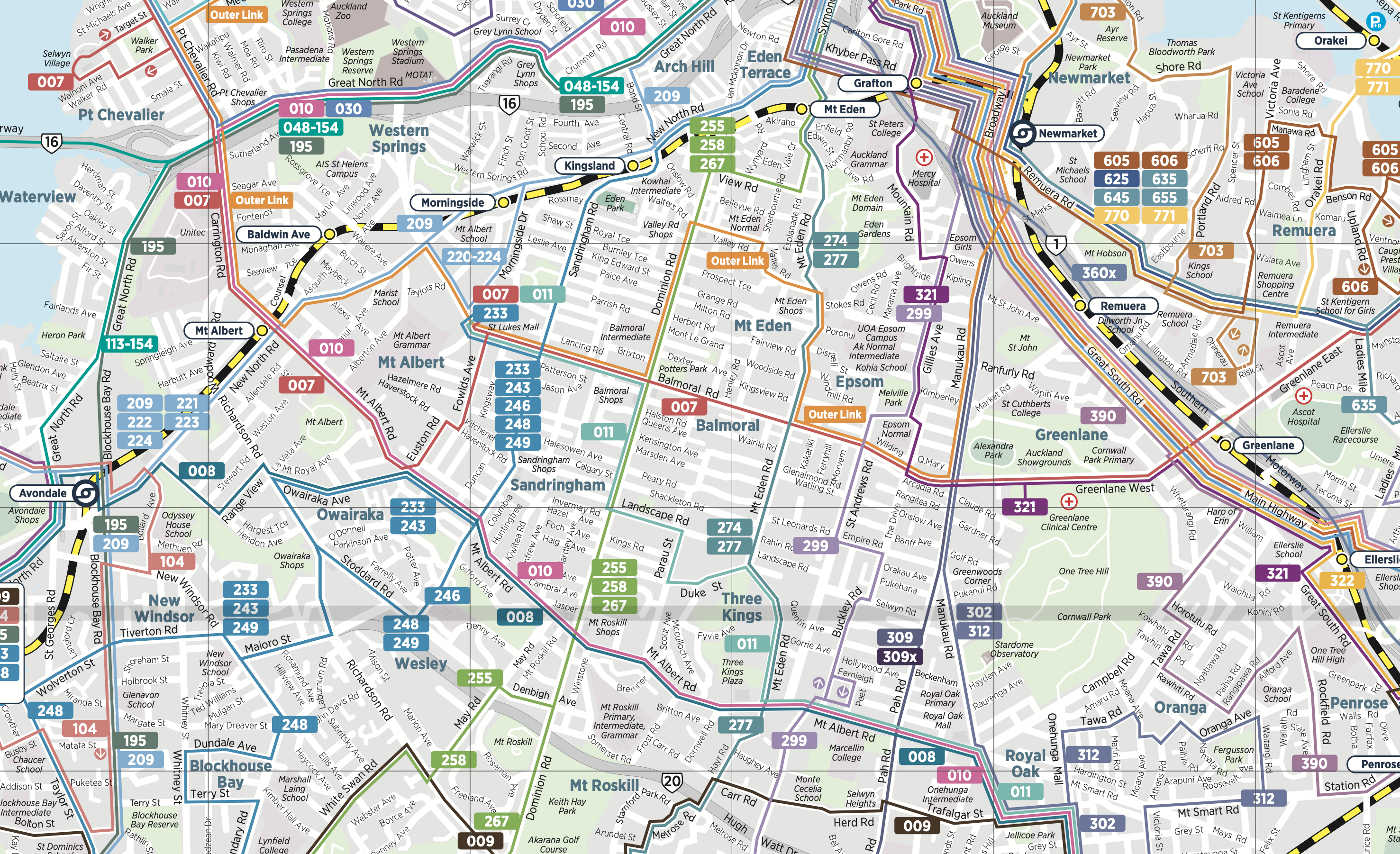
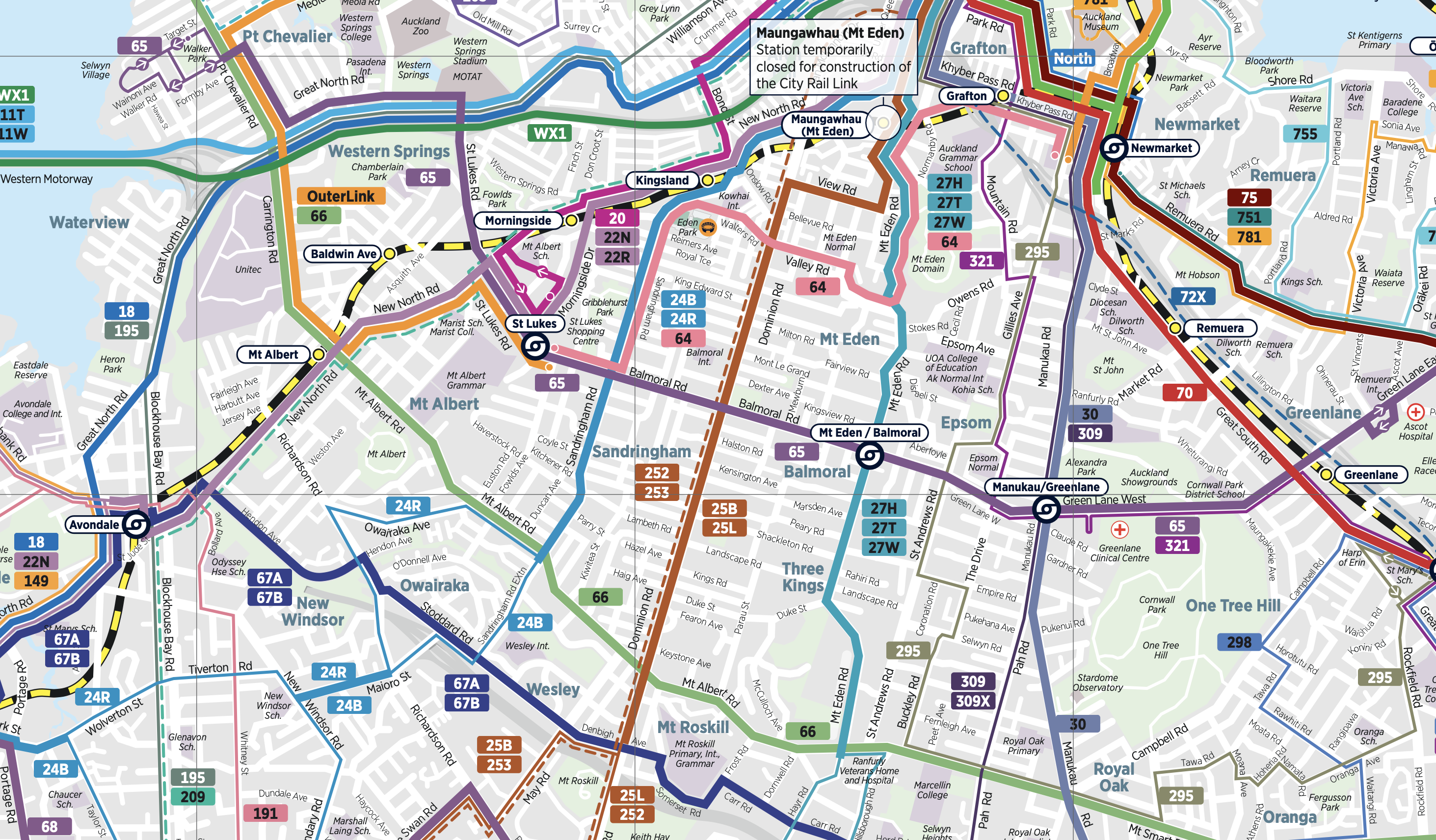
The old system had its own geographic logic, but it was inconsistent and also included many more route variations. Historically, it was the 0s around the inner west of the isthmus, 1s out in West Auckland, the 2s in the central isthmus west of Manukau Rd, the 4s were used throughout South Auckland, the 5s in East Auckland, and the 6s and 7s in the eastern suburbs in the isthmus. The 8s and the 9s were used in the North Shore.
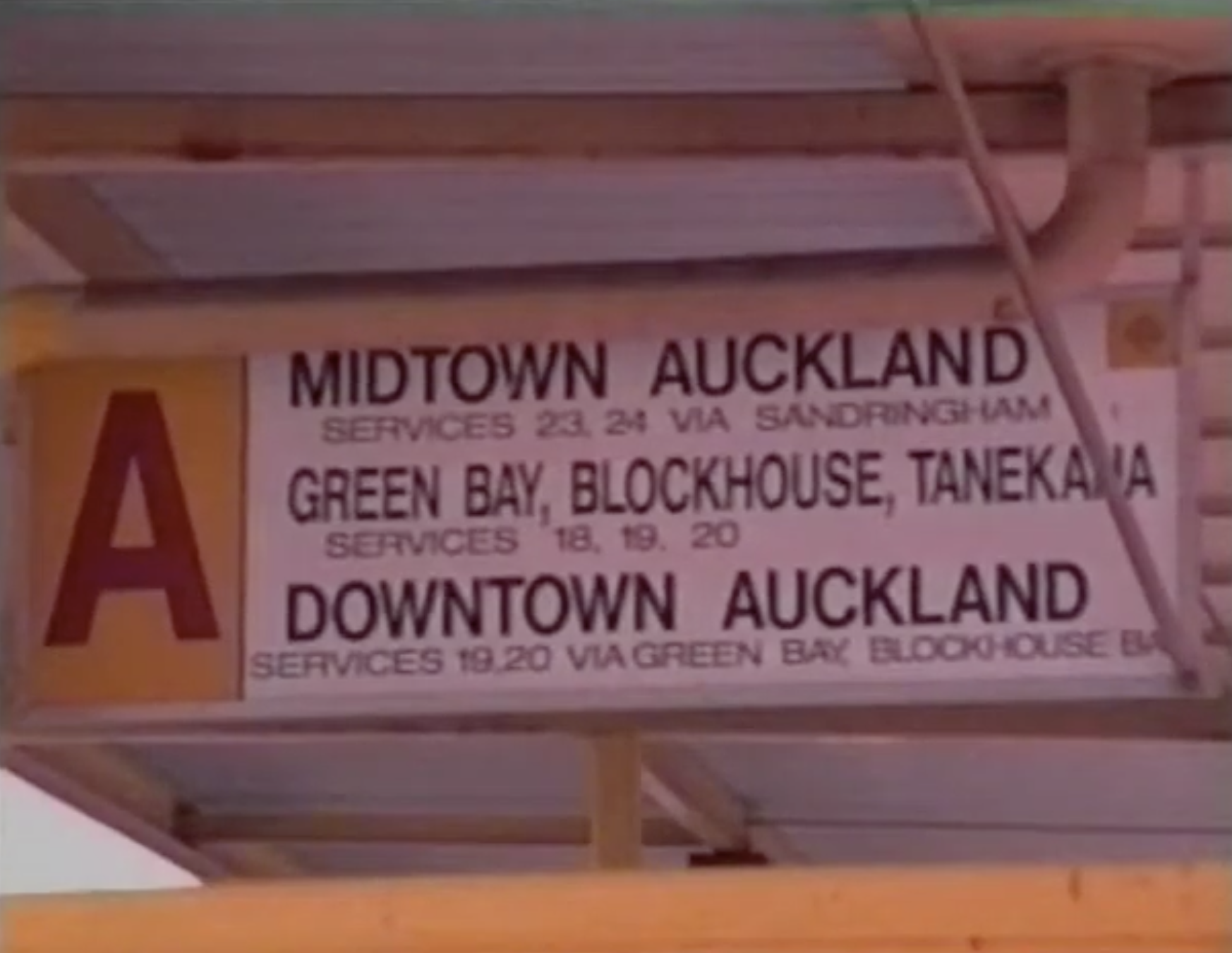
By and large, any route numbers which were kept were only kept as they could be modified and fit into the new system, which was also partially based around them. It also showed the legibility** of the previous network in particular parts of the central isthmus, such as Sandringham Rd, which were simpler to begin with (24X routes) but also had additional rationalisation done earlier in the decade. It'd compare well to other examples, such as Great South Rd, which had too much frequency (relative to demand) and not enough legibility.
The freaks
There are three other classes of buses in Auckland with their own separate numbering conventions.
School buses occupy an entirely different three-digit range. They're a massive sprawling operation with so many services that there are multiples of the same route number operating in different parts of the region — there are five different 001 school buses. These get an S prefix in planning, but you won't see it on the buses themselves or real-time boards.
One interesting facet is that it occupies the S0XX range and the S4XX-SX5XX range, but leaves out most three-digit numbers that could be confused for connector or local services, which might've been able to share the same route number.
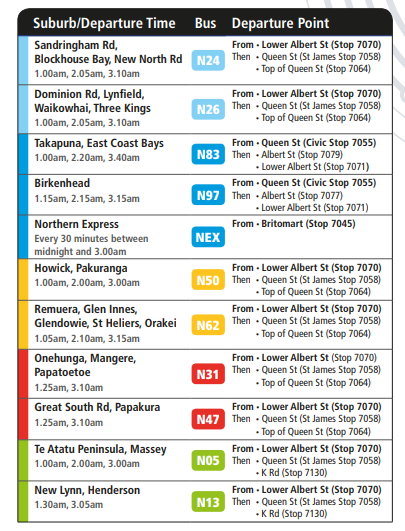
Night buses are a bit of an oddity. They've been stuck in a period of stagnation for years, with none of the upgrades that have transformed the rest of the bus network. Falling patronage has largely been the product of Uber's rise and the decline of dodgy taxis***. Wellington has scrapped its after-midnight network entirely.
Before the redesign, night buses were branded as NiteRider with a consistent NXX naming scheme, similar to Vancouver. Many of these services were quite circuitous. The new network removed most of them, instead opting for additional late-night services on lines that also run during the day, with one exception.
The N10 runs between the city, Onehunga, Mangere and Ōtara with little relationship to any other route on the network. But the most recent regional public transport plan suggests it may be scrapped in favour of additional late-night trips on route 30.
The other outlier class consists of rail and ferry replacement buses. These use alphabetical route names only with clear prefixes — RB or FB — and a four-letter maximum. The letter X is more commonly used to denote express here than on ordinary routes.
RBS = Rail Bus Southern (line)
RBPX = Rail Bus Panmure Express
RBOC = Rail Bus Onehunga Connector
RBWN = Rail Bus West Newmarket
RBSE = Rail Bus Southern and Eastern (line)
FBGH = Ferry Bus Gulf Harbour
FBHM = Ferry Bus Half Moon (Bay)
What could've been
There were several iterations of route numbering tested during the old network to new network consultation period. One style would have been to have alphanumerical route numbers with letters denoting the region the bus belong to.
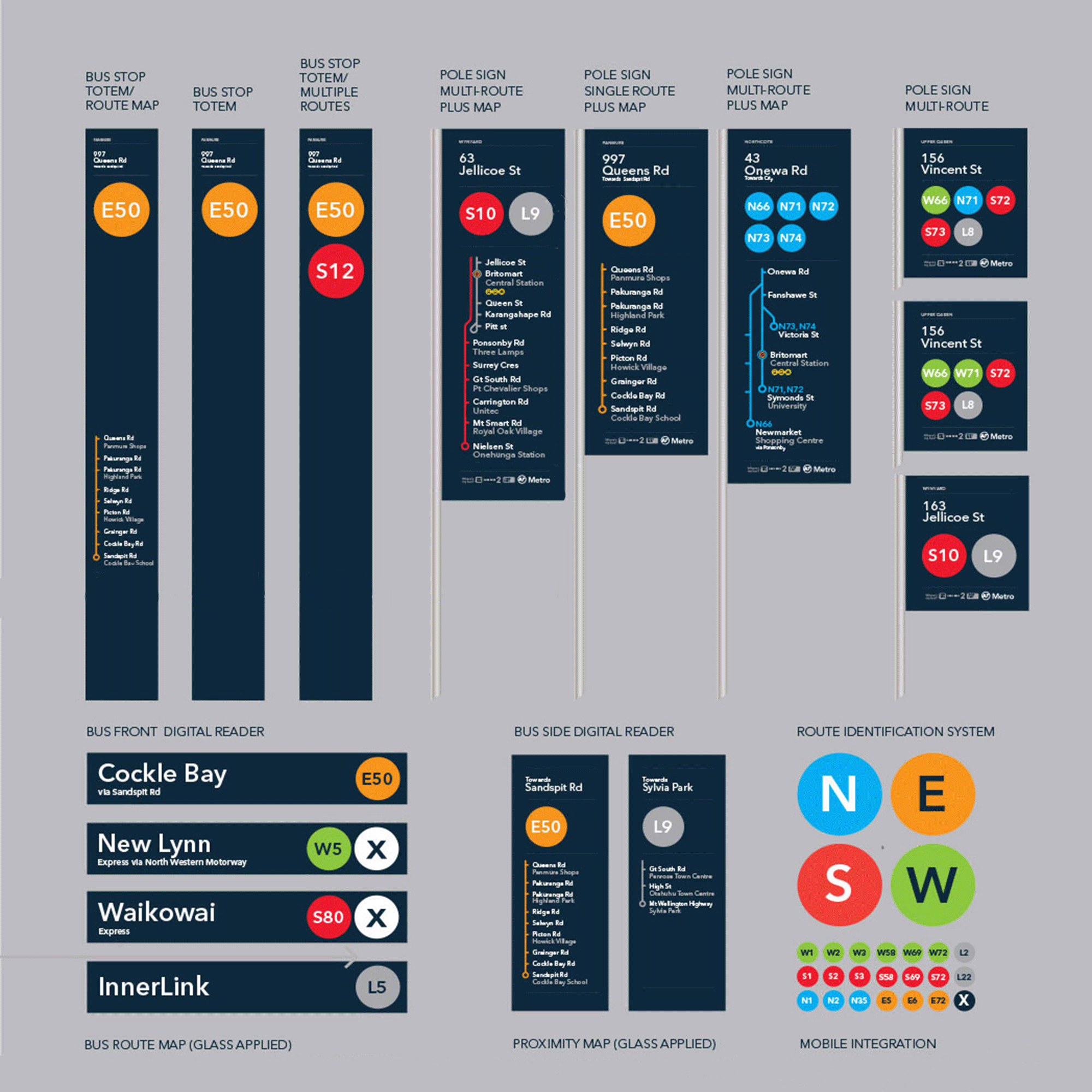
This variant of route naming could be seen in the consultation for the North Shore and West Auckland consultations.
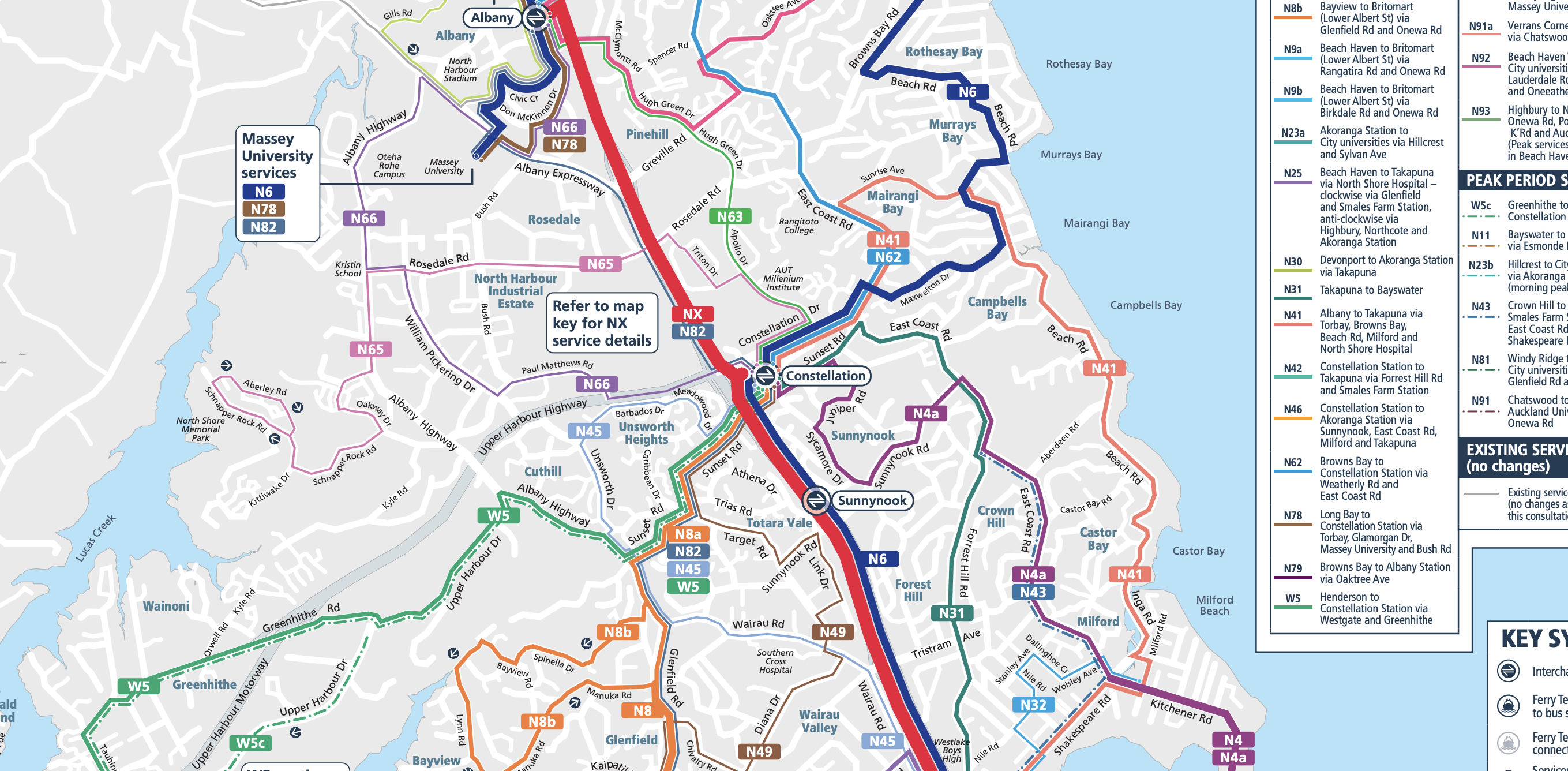
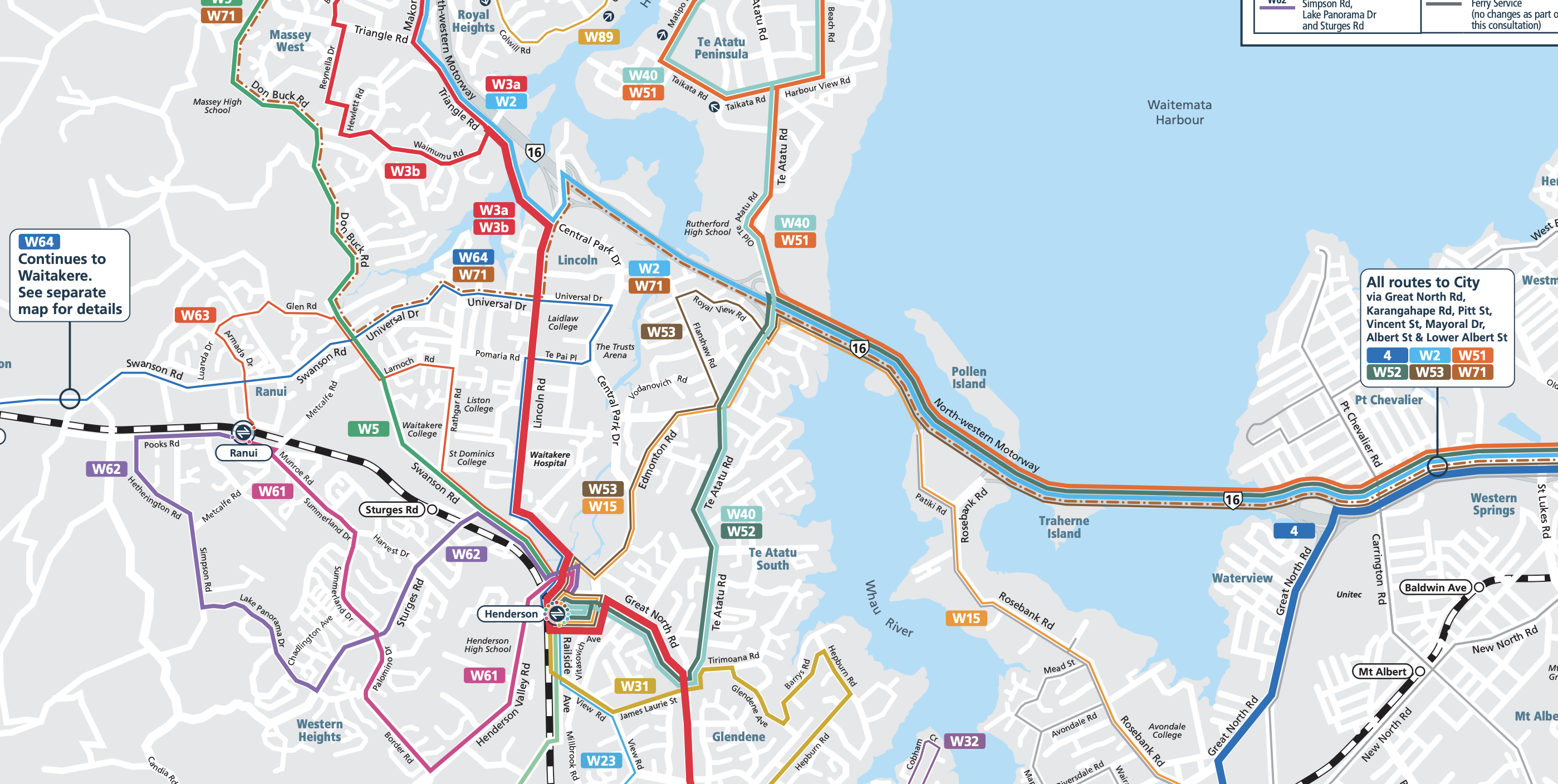
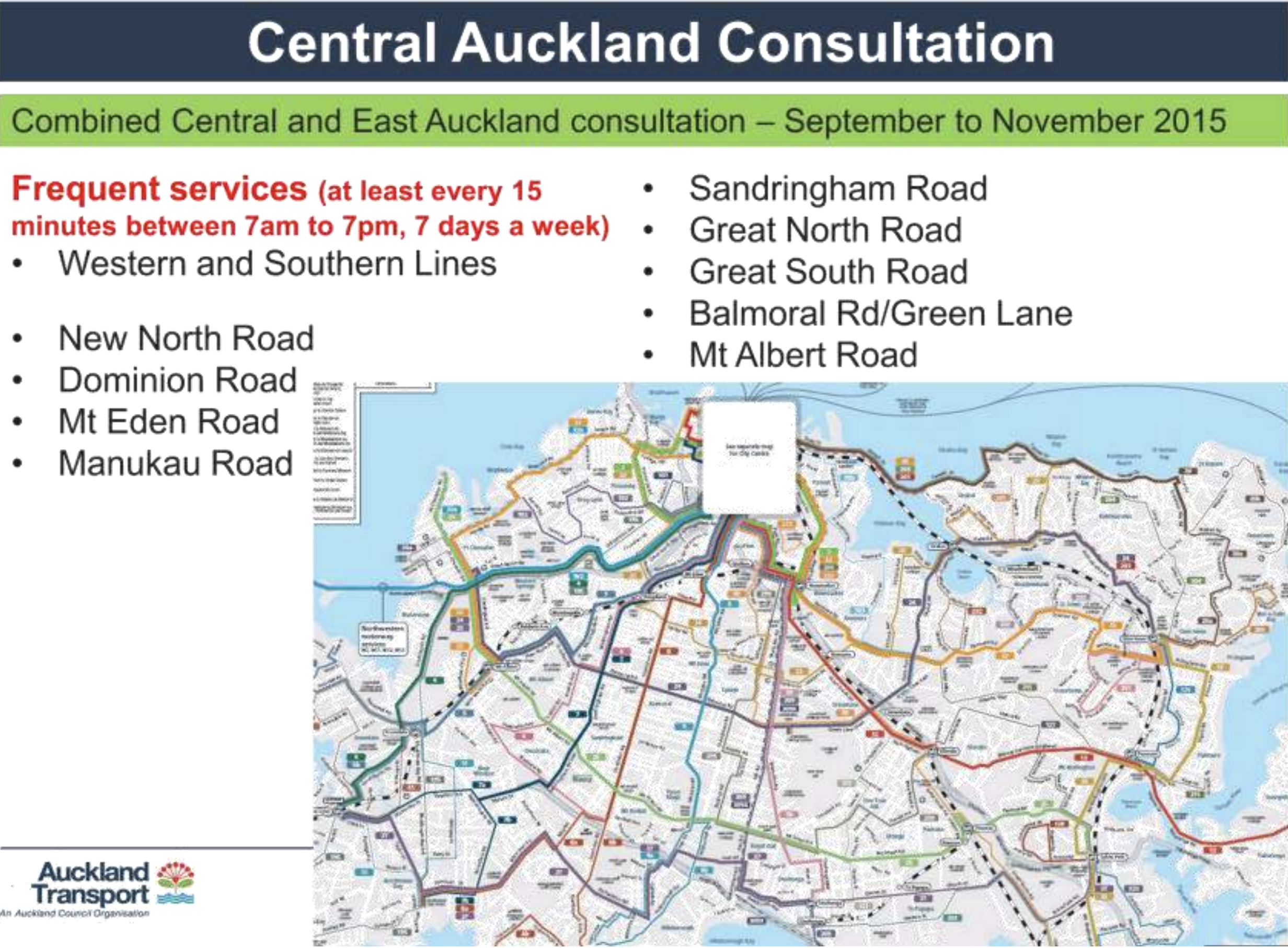
As part of this, there was also the suggestion that central isthmus routes could be renumbered with single-digits for the busiest north-south corridors - a la Wellington's network. That's visible in the West Auckland consultation where the now-route 18 is labelled the 4. It's unclear how other routes in the isthmus would be numbered.
What's still to come and challenges
With the expansion of the frequent network, there's growing demand for new route numbers in the two-digit space, plus new subregions demanding their own ranges for future expansion. Drury will receive two frequent buses, the 40 and 41, when its train stations open. This will presumably mark off the 4XX class of services for Southern Auckland, though Pukekohe continues to retain multiple 3XX services pending potential conversion into a rideshare service.
* I use "system" in the first sentence intentionally. A network is a collection of interconnected entities that exchange interaction, information, or influence. Aside from physically touching each other on a printed map, the Auckland region's pre-2016 bus system had almost no features of what would qualify here as a "network". Routes were almost entirely designed by bus operators. Very little was done to coordinate these services to match demand on many corridors. Few transfers were ever encouraged. See more here about turning a pile of lines into a network.
** A big part of whether someone understands bus networks is if they understand legibility. Some may instantly view issues such as stop requirements (usually in peak) or uneven demand on branches, and call for an adjustment to the shape of the line. A little kink in the route there. A different stop, a few streets over at rush hour. Maybe the bus should randomly stop at Victoria Park, and the passengers get booted off for operational reasons? Whatever the case, it hurts the legibility.
*** For a blast from the past, check out this Target hidden camera investigation from 2007 for a reminder of what calling for a taxi from Arch Hill to Mt Eden was like before wireless data connections and smartphone apps took over.
