Optimising the Eastern Busway
There's a lot of quibbles I have with the Eastern Busway.
It's a ~$3 billion project that is heavily aimed at 9-5 peak commutes on one corridor (targeted at CBD folks), and that primarily gets political support through the strategic success of the Northern Busway, despite being a totally different kind of BRT system. Don't get me started about the flyover.
That said, it's too late for those quibbles. The flyover is finished. The stations and busway itself are well under construction.
There's still a lot that can be done to improve the project from its current state, and how it works in reality when the construction is done and dusted.
Service, service, service (i.e. opex, opex, opex)
We always love to cut ribbons on big infrastructure, but forget what actually makes transit useful: the service running on it.
The Northern Busway (and soon Northwest Busway) have above-average utilisation, because they has logical interchange points all along the busway where feeder buses connect with the NX. Even with terrible land use around stations (asphalt seas and business parks), it builds good patronage through these connections and the fact it has everything else going for it.
The Eastern Busway won't work exactly that way.
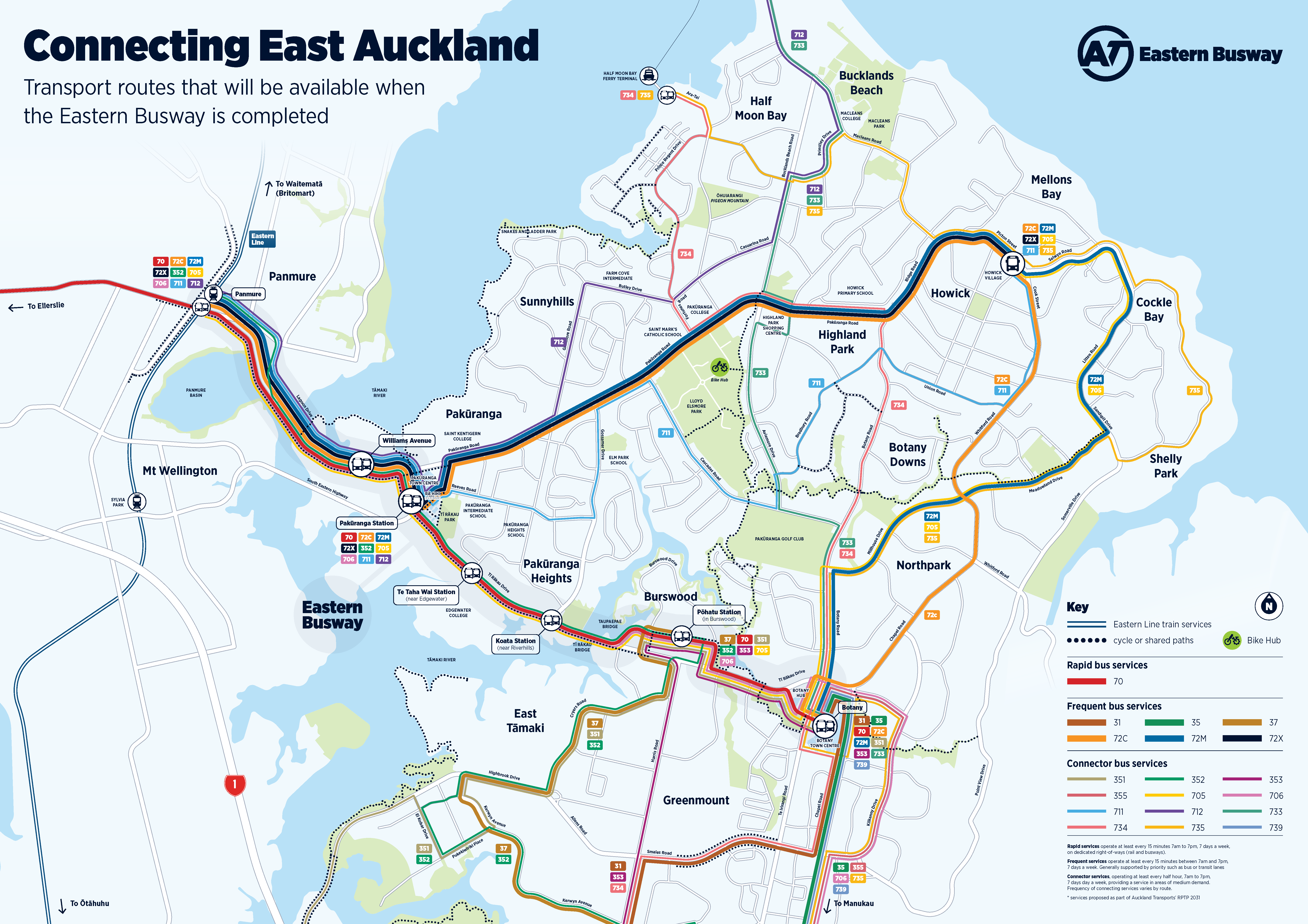
While it does introduce a congestion-free corridor between Panmure Station (with trains to the city) and Botany, it'll rely a lot more on people walking/cycling to stations, kiss-and-ride demand, and people transferring at Botany from local services.
There's a few ways the bus network can respond to this differently to maximise patronage.
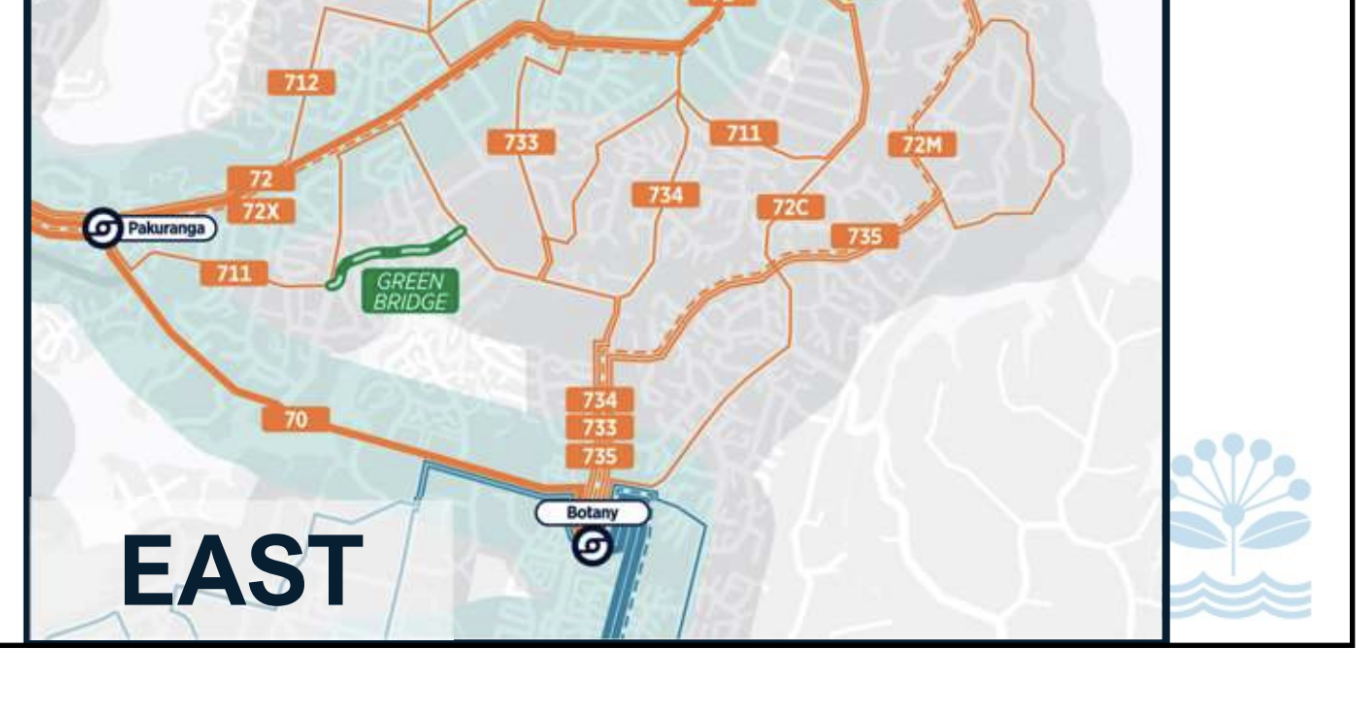
Firstly, I think it's worth considering what was initially proposed in the 2017 New Network consultation - having a "self-contained" frequent service from Panmure along the busway that branch at Botany to serve Howick/Meadowlands and Dannemora/Flat Bush. The current 705 and 706 peak services should be all-day patterns, not peak-only. Why? Several reasons.
1. The busway needs reliable service.
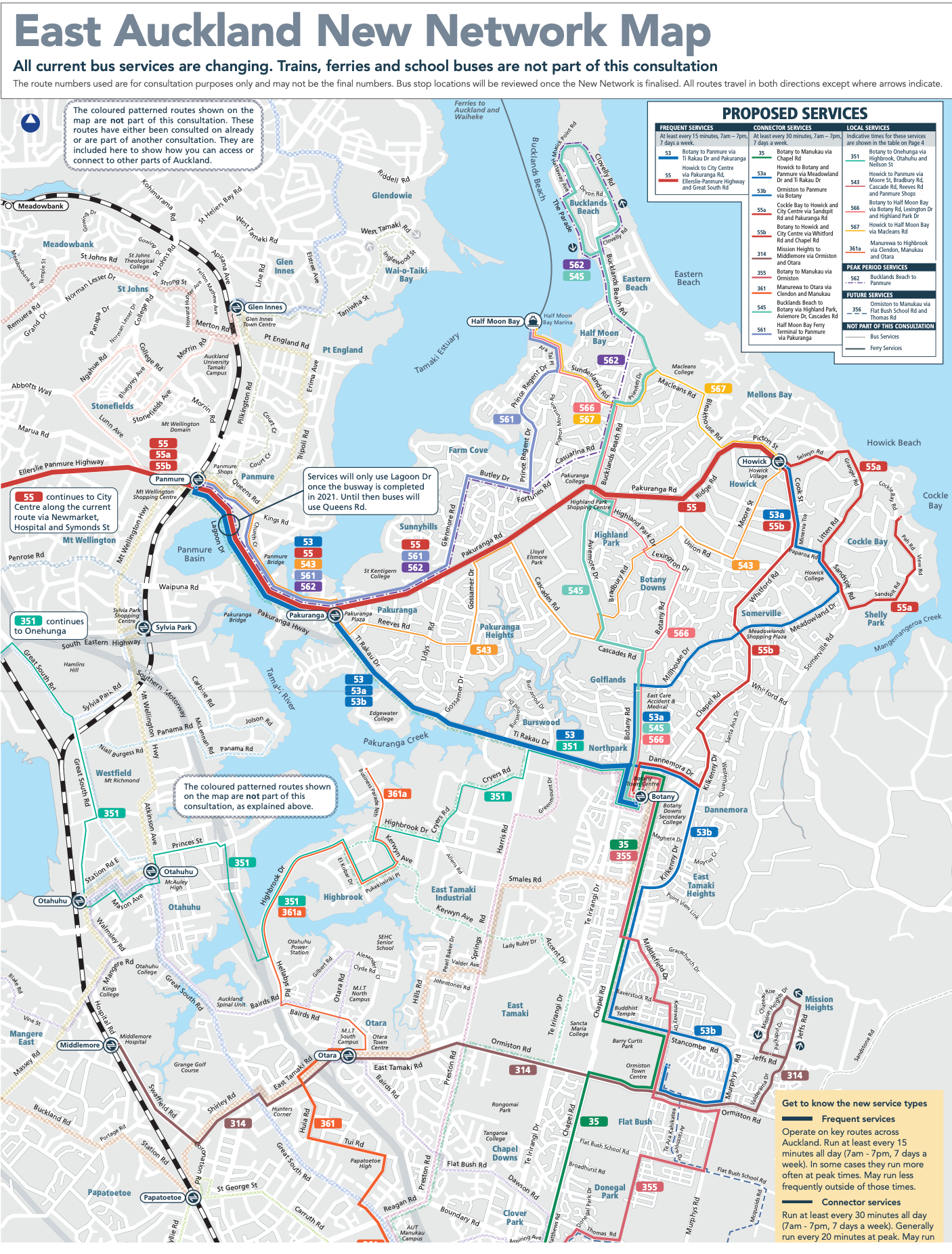
The existing 70, by its very nature of being a 20km route, bunches easily even without traffic affecting it. The new network consultation report talks about this in detail and concludes there's *enough* existing priority along the route to not make this an issue.
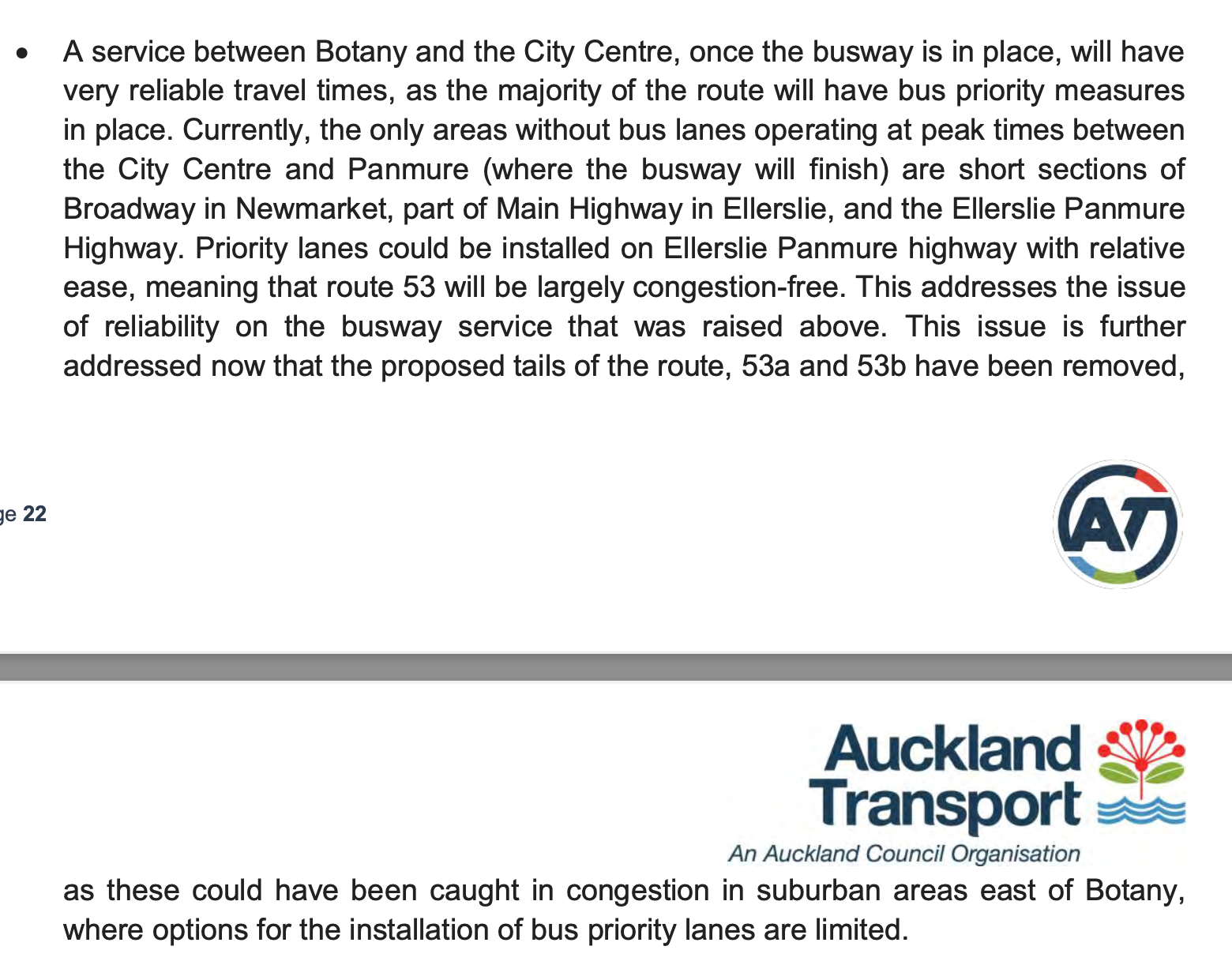
I'd suggest anyone who's tried to catch a 70 regularly would know this is not true. Terminating the 70 at Panmure, and beginning separate busway services at Panmure would address this, and the branches at the Botany-end are only 3-4km long with lower-levels of traffic delay than the existing 70. There's also greater opportunity here for high-yielding bus priority like bus lane pockets, etc to further enhance reliability. I disagree with AT's assessment in 2017 that these options are "limited" at the Botany end.

2. Extending the reach of the busway.
The nature of East Auckland's geography means there aren't many transfer points for people to make it onto the busway. The biggest location is at Botany, and otherwise only at Burswood station. A trip from Meadowlands to Highbrook would be 3 buses under the planned off-peak network. Under an all-day 705/706 branching system, this could be just 2. From Sylvia Park to Howick would be 3 buses (or 1 train + 2 buses) too if you wanted to utilise the busway.
The biggest downside of this change is that it would probably necessitate East Auckland losing a direct bus to the city centre. The logical solution would be to terminate the 70 at Panmure, and have all passengers transfer for onward connections. This could be politically contentious. The alternative to this would be switching the 70 to Pakuranga Rd to terminate at Howick, but that makes the overall option more marginal as you lose the benefits of making the 70 more reliable.
To do this at all though, would necessitate a look at the entire East Auckland network. You can tell why this may not be worth the effort.
Some other changes which are worth the effort.Someone needs to take a look at the buses that go through Church Crescent instead of along Lagoon Dr and the busway. These are the 711, 712 and 352.
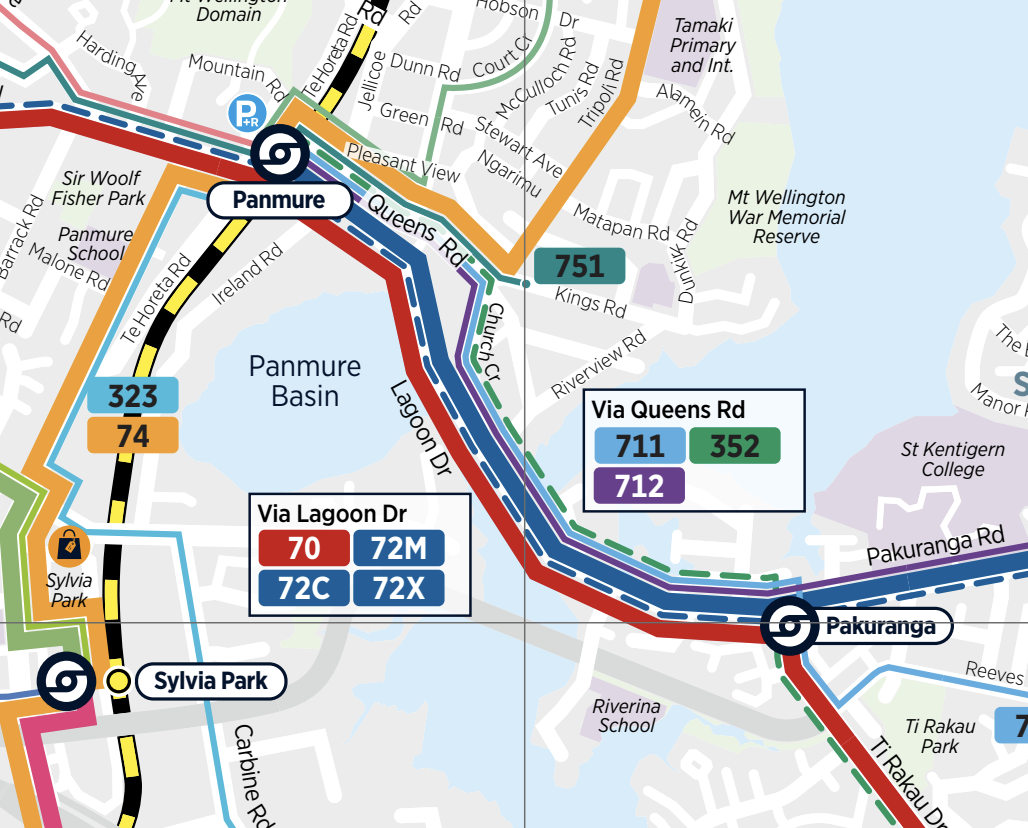
The long-term solution should be to re-direct the 7XX buses onto the busway and find another solution for coverage for the Panmure town centre. The bulk of the passengers on these services don't benefit from the deviation, and it only serves to provide coverage between Panmure Station, Panmure town centre, Pakuranga Rd busway, and Pakuranga town centre. The Panmure Business Association actually fought to keep buses in their town centre when the busway was first proposed - a noble stance, I might add. A shorter coverage service or extending another bus - perhaps the 751 - would be the better option than taking people from Bucklands Beach or Howick on the long way around.
Another easier change is that the low-frequency local routes in East Auckland (the 711, 733, 734, 735) must be upgraded to connector status, every half hour, 7am-7pm, seven days a week - with ideally longer operating hours. Some upgrades are already happening on the 351 and 355 later this year to meet this.
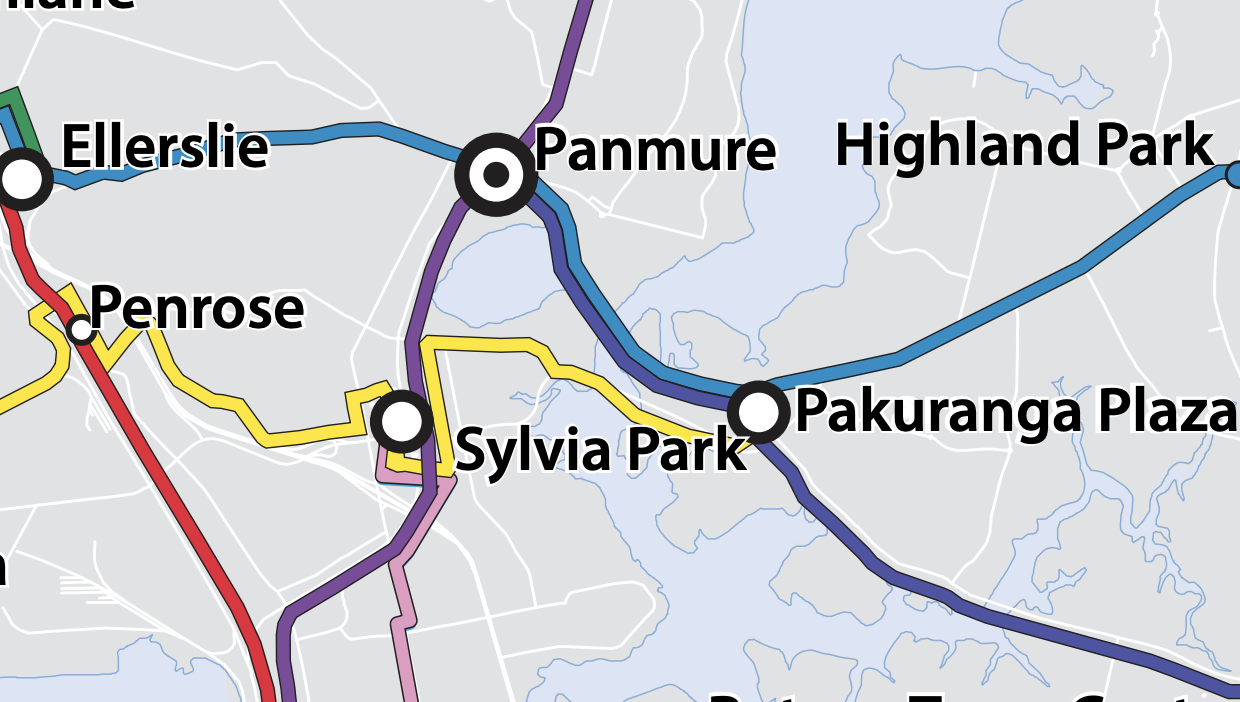
I also think it's important to take a look at services along the South Eastern Highway - possibly extending the 66? - so that there is a connection between Sylvia Park and Pakuranga. The infrastructure team didn't make this easy (Pakuranga station isn't designed well for buses coming off the Reeves Road flyover), but it's good to avoid the current Panmure dogleg for people traveling between east and destinations on the southern half of the central isthmus.
Fix the traffic lights
This has already been a problem on the existing busway - the priority is weak. No point having "rapid transit" if buses stop at every light.
At Lagoon Drive and Basin View Lane, turning traffic currently gets priority over buses. Furthermore, it's clear buses do not have any kind of power to get a green light in most instances. It's pure luck if a bus gets a green wave.
This is all ridiculous of course, there's no point building a big multi-billion bus-only road if it gets cut off at every single road intersection. Most people don't know that a huge part of bus delays are ultimately intersection and signal delays, alongside dwell times. Green lights for buses is a huge part of speeding up buses.
The Pakuranga Town Centre area needs special attention. One benefit of the flyover is diverting traffic from surface streets - this is a good opportunity to optimise signals for buses and pedestrians with the reduced traffic volumes. This is especially the case since the busway has to swap between different sides of the road and cross multiple intersections through this section. It'll be critical the signal priority is working here for all of that to not add too many delays.
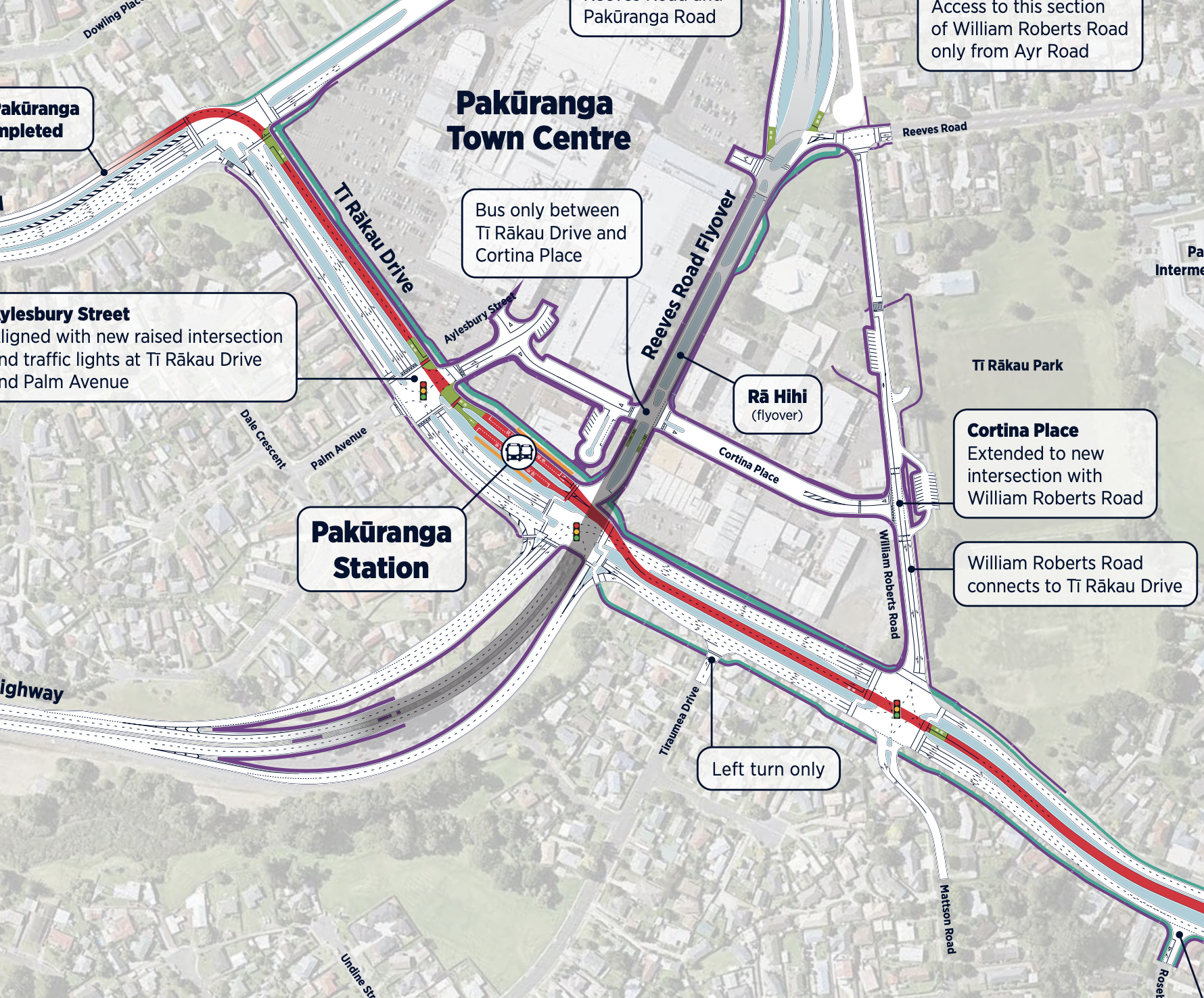
Here's an example of how the existing lights near the town centre don't work.
Further along the Pakuranga to Botany section of the busway, there's also a lot of opportunities for mischief where buses could end up waiting unnecessarily. There's multiple intersections, turning lanes and dedicated U-turn bays. These all must be optimised for buses and pedestrians. Ideally, buses have full priority so they almost never need to stop at these intersections.
This is actually the hardest part of most BRT projects.
With rail, trains physically can't stop for cars. With buses, it depends on how committed AT is and whether politicians interfere...
Fix the urban design around the flyover i.e. make it a nice place to be
The flyover's already a couple of steps backward, but now's the time to make the best of what's left. The big roads through Ti Rakau Drive and Pakuranga Road already bifurcates the area, so you need to make sure there are at least some places that feel genuinely walkable and liveable.
You'd want to look at creating some low traffic zones around Reeves Road too — streets like Aylesbury Street and William Roberts Road where you could build.
The rebuilt William Roberts Road is already a bit of a disaster - parts are without footpaths at all, which is abominable for a local street. It has one zebra crossing when it needs several proper crossings instead of those courtesy medians. And it desperately needs more street trees.
The key is trees. Lots and lots of street trees so there's proper shade along the footpath (there has to be a footpath on both sides of the road...). Make sure all the signalised intersections have proper pedestrian phases with no missing legs.
Heavily light the area under the flyover to avoid antisocial behaviour at night.
These generally may seem like aesthetic and minor concerns, but these streets may become very important in the future with more intensification in the area.
All of this is also doubly true for the streets surrounding all the stations on the busway e.g. Edgewater, Gossamer, etc.
What's next: extend the priority
Momentum is important and it's important to maintain that once the busway is open. There's several (relatively) easy and (relatively) cheap things that can be done here to improve public transport across the whole region.
Improve bus priority on Pakuranga Road. One big complaint about the busway project is it doesn't do much for public transport users from Howick or Bucklands Beach - they're still stuck on Pakuranga Road.
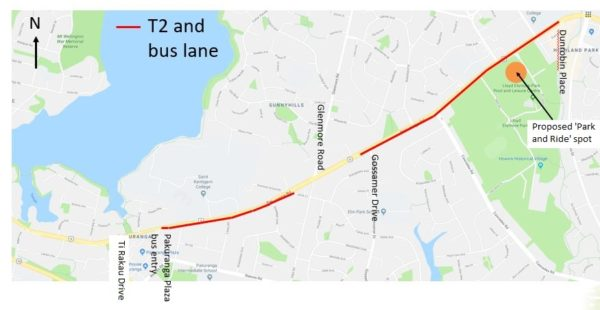
There are T2 lanes and some bus pockets, but much of the former got watered down in 2019. The street desperately needs some T2 lane extensions - especially near St Kentigern College. Furthermore, there's a good opportunity here for adding more signalised crossings for bus stops along this route.
Look at neighborhood interchanges, especially Highland Park, Howick. Right now, they're usually some old bus shelters with not much else around in terms of amenity. They'll be useful in the future for facilitating bus-to-bus transfers.
Connect the cycleways. There's a shared path winding off Ti Rakau Drive that connects to nothing right now. This would be a great opportunity for some minor extensions. i.e. How do you make Panmure to Highbrook possible? The Rotary Path is good too but, like the shared paths around Golflands, have choke points and are probably too narrow to be high-capacity commuter cycleways.
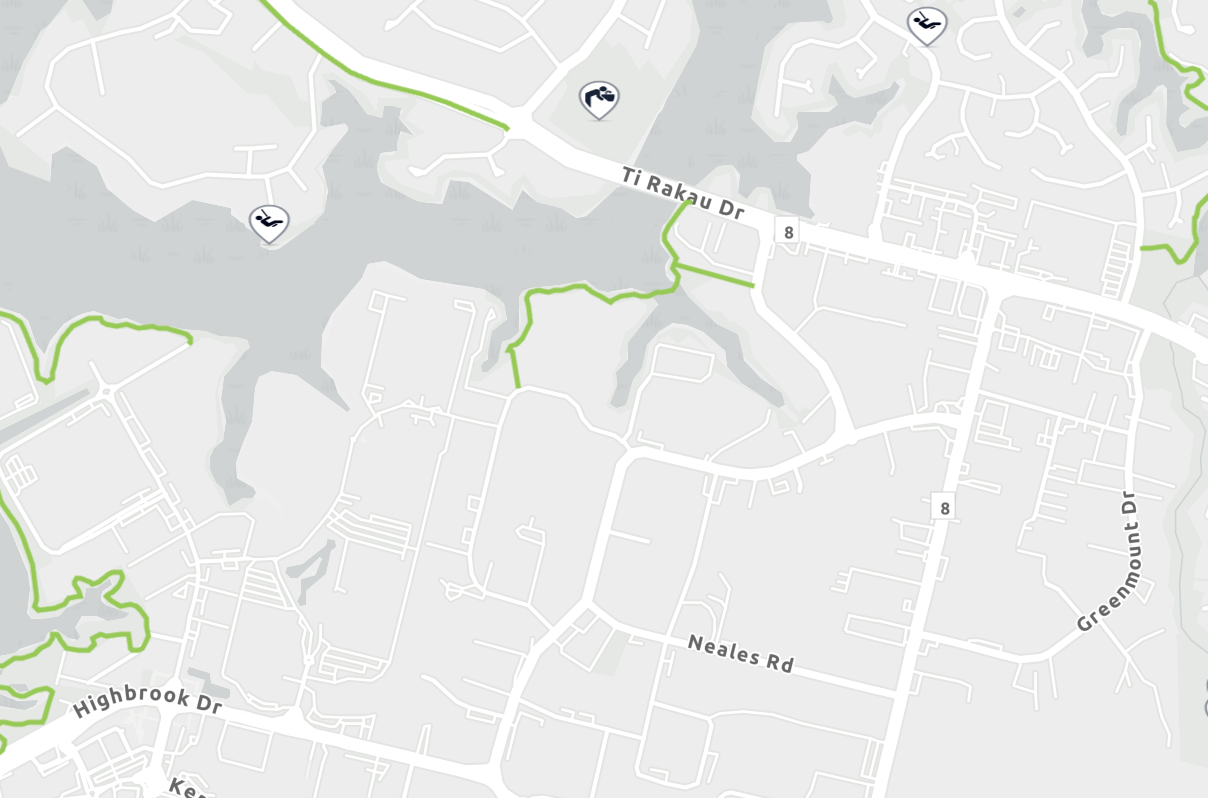
. It's a mothballed project with a great business case. Even as a single-lane bridge, it would provide a crucial third east-west link through Howick and Pakuranga.